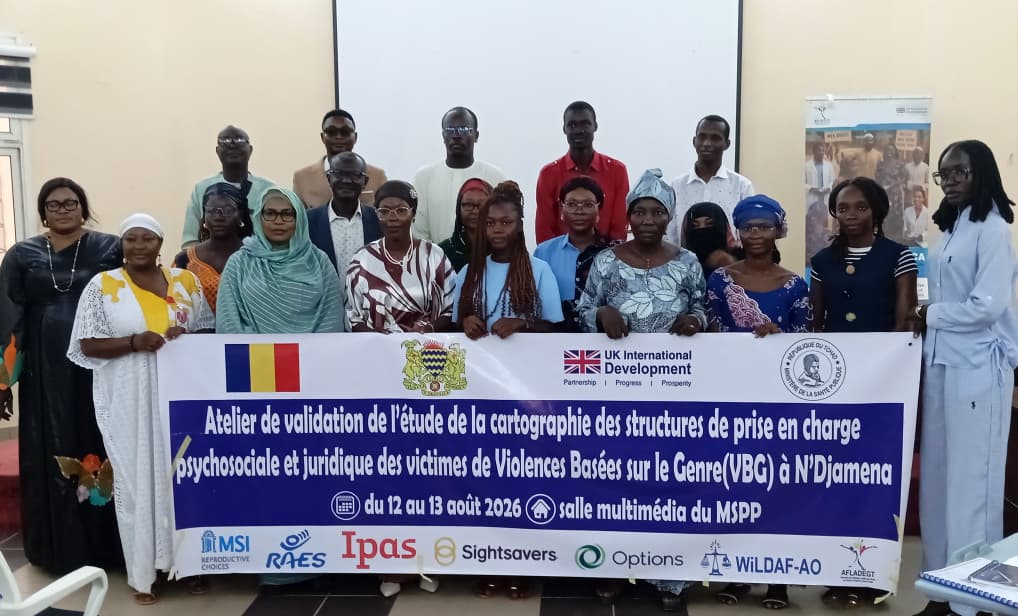
In a significant move to strengthen support systems for survivors of gender-based violence (GBV) in Chad, the Association of Feminist Leaders for Access to Rights and Gender Equity in Chad (AFLADEGT) is convening a two-day validation workshop in N’Djamena on August 12-13. The event will focus on reviewing and endorsing a newly completed mapping study of legal and psychosocial assistance services for GBV victims.
Funded under the WISH 2-WACA project, this initiative aims to address critical gaps in service delivery by enhancing victim orientation and fostering better coordination among care providers. Participants—including government officials, civil society representatives, technical partners, and specialized agencies—will analyze the study’s findings and contribute to refining its recommendations.
Why this mapping matters
At the workshop’s opening, Wouténé Mélissa, President of AFLADEGT, emphasized that the study is more than just a report: it’s a strategic tool for advocacy, coordination, and decision-making. « Survivors deserve immediate clarity on where to seek help, how to be referred, and what services are available, » she stated. « This mapping ensures no one is left navigating the system alone. »
The study reveals stark disparities in service coverage across N’Djamena’s neighborhoods, with notable shortages in confidential intake spaces and trained personnel. Key areas needing improvement include victim awareness, referral mechanisms, and resource allocation. Mélissa called for actionable recommendations to bridge these gaps and mobilize additional support.
Legal and judicial gaps exposed
Dr. Kadidja Amadaye Abgrene, Director of Reproductive Health, underscored the severity of GBV as a violation of fundamental rights. While acknowledging progress—such as legal reforms and the creation of integrated service centers—she highlighted persistent challenges. Currently, fewer than 11% of identified victims receive legal accompaniment, with informal dispute resolution, lack of information, and disjointed referral systems exacerbating the crisis.
The mapping also uncovered uneven service distribution across districts, a lack of secure, private consultation spaces, and urgent needs for human and material resources. For Dr. Abgrene, the findings must now guide policymakers in streamlining referrals, improving sectoral collaboration, and prioritizing resource allocation.