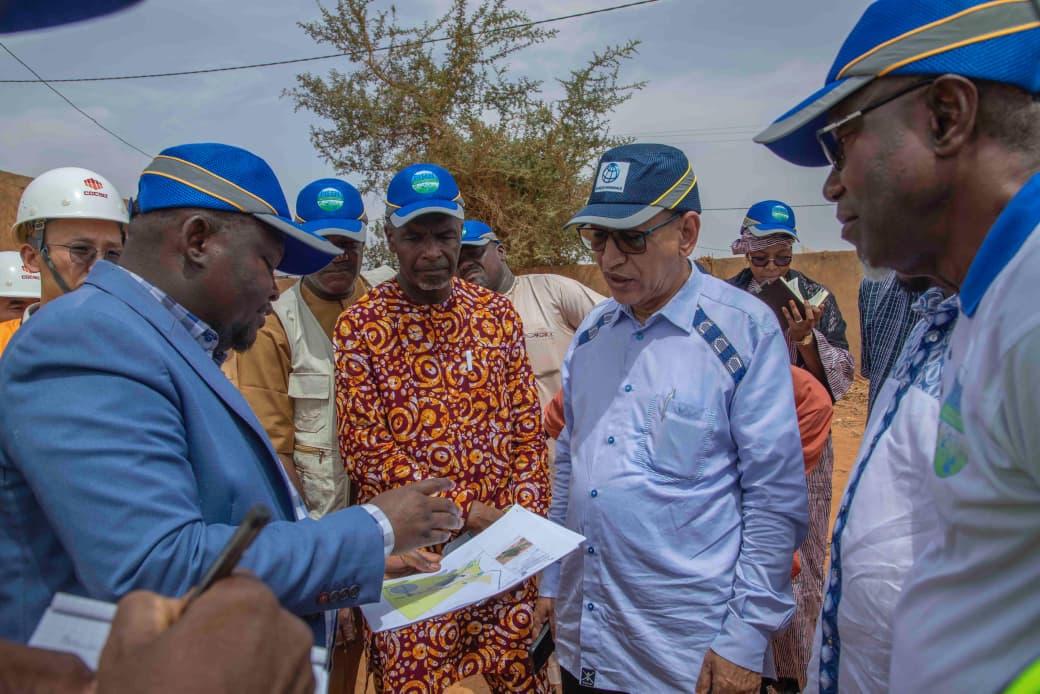
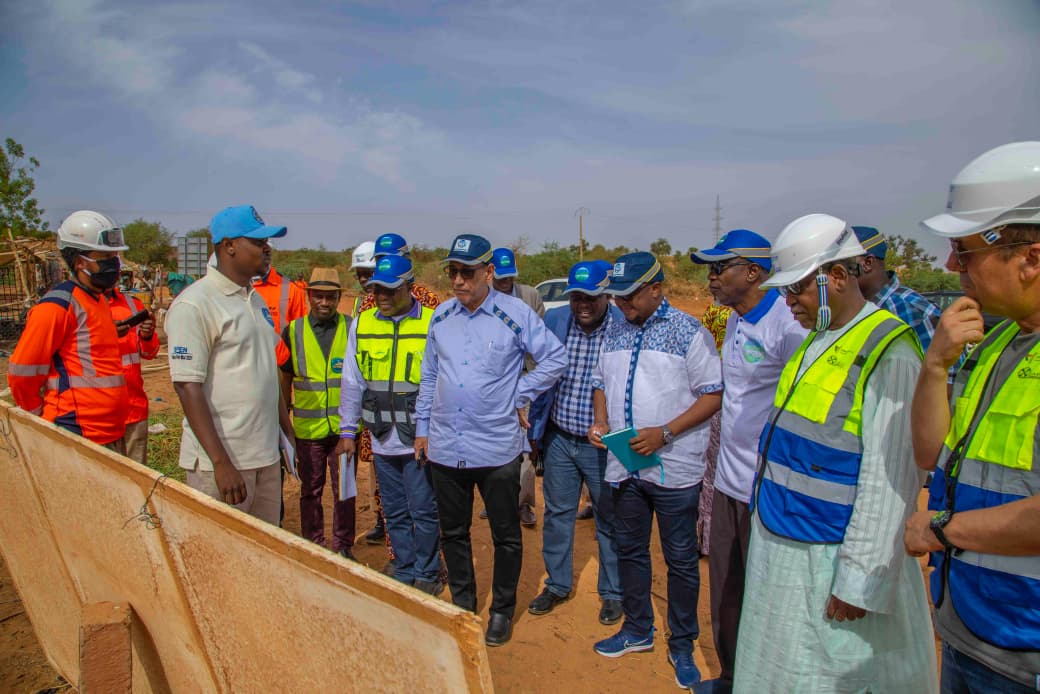
Niamey recently witnessed a high-level inspection of the ongoing construction of its third potable water treatment plant, a critical milestone in the nation’s water security strategy. Led by Zibo Zakara, National Coordinator of the Integrated Water Security Platform for Niger (PISEN), Mohamed Nanzoul, World Bank Project Manager, and officials from Niger’s Water Heritage Society (SPEN), the delegation toured key construction sites including the water intake point, the plant itself, and future reservoir locations.
Phased expansion to boost Niamey’s water supply
The ambitious project, part of Niamey’s 2017 Urban and Semi-Urban Water Master Plan, aims to significantly expand potable water access in the capital’s urban and peripheral zones. The new facility will ultimately deliver 250,000 cubic meters of water daily, rolled out in three phases: an initial 100,000 m³/day capacity, followed by two additional phases of 75,000 m³/day each. PISEN oversees the project coordination, with support from the World Bank, while SPEN serves as the lead developer.
Infrastructure milestones and future capacity
Technical teams confirmed that raw water will be channeled to a newly constructed processing facility, then distributed via two 2,500 m³ reservoirs on the Yawari plateau. These reservoirs are designed to supply water to Niamey’s outlying neighborhoods, alleviating pressure on the existing network.
Zibo Zakara emphasized that the first phase—delivering 100,000 m³/day—will ensure Niamey’s water security through 2035. The project encompasses ten distinct work packages, with future expansions already planned for the river-based treatment infrastructure.
He noted that while early progress had stalled, momentum has now shifted decisively. “Work has truly taken off,” Zakara said. “On work packages six and seven, we observed excavation in full swing, with heavy machinery deployed and significant local labor engagement—including subcontracting and direct hires—maximizing national participation and project benefits.”
World Bank reaffirms commitment to Niger’s water goals
Mohamed Nanzoul, World Bank Project Manager, praised the construction team’s progress, pledging continued financial and technical support to ensure sustainable water access for Niger’s growing capital.
Haladou Laouali Amani, Project Manager for the third plant’s construction, outlined the preparatory steps completed: site mobilization, equipment installation, topographic surveys, and geotechnical studies. “This is a transformative project,” he stated. “Once operational, it will mark one of Niger’s largest potable water infrastructure developments, adding roughly 45,000 new social water connections and dramatically improving access across Niamey.”