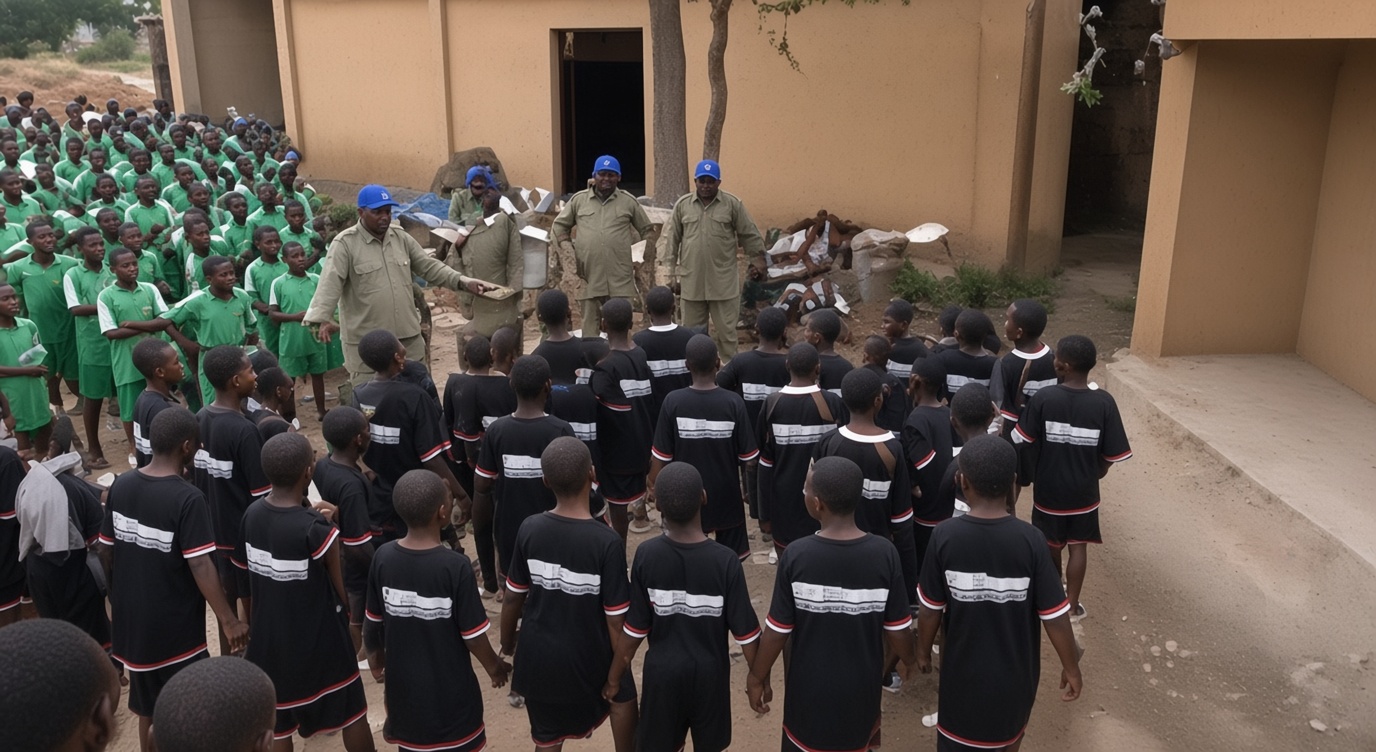
General Abdourahamane Tiani has recently inaugurated a training camp that brings together more than 300 young people from Niger. While the initiative is presented as a compelling civic engagement, a national revival and a foundational step for the country, it draws inspiration from the Burkinabè model championed by Captain Ibrahim Traoré. However, beneath the carefully crafted rhetoric and the glorification of an ‘engaged youth’, the underlying reality may prove far more unsettling: through the guise of patriotism, the military regime appears to be laying the groundwork for an early militarization of society.
Education over Militarization
The formative years of a child or adolescent should be dedicated to education, vocational training, sports, cultural development and civic learning. Introducing young minds to a militarized environment emphasizing strict discipline, unquestioning obedience and perpetual mobilization risks normalizing the culture of arms and confrontation over time. This approach not only distorts the purpose of youth development but also undermines the very essence of genuine civic responsibility.
The Political Message to a New Generation
The central dilemma lies not in the nature of the camp itself, but in the political message it conveys to an entire generation. When a military-led government frames youth mobilization as a patriotic obligation, it risks prioritizing blind loyalty to the regime over the cultivation of critical thinking. True civic engagement requires more than passive obedience it demands the ability to question, debate and uphold the broader public interest.
The line separating civic education from indoctrination becomes especially thin when young participants are continuously exposed to a rhetoric of perpetual struggle, sacrifice and devotion to the nation. While a mobilized youth can benefit the country, it should never be reduced to a mere resource pool to sustain a military authority in power.
Investing in People, Not Ideology
One must question why a nation would prioritize ideological mobilization over tangible investments in functional schools, accredited vocational training programs, job opportunities, infrastructure development and viable future prospects for its youth. Patriotism, however noble, does not feed families, replace academic credentials or generate employment on its own.
The rhetoric of ‘mandatory civic duty’ may serve as a convenient political smokescreen. By promoting an image of disciplined, eager and sacrificial youth, the regime may divert attention from pressing socio-economic challenges failing educational systems, youth unemployment and the social costs of political instability.
Long-Term Implications of an Age of Mobilization
The long-term sustainability of such a model must also be scrutinized. A generation raised under the banner of perpetual mobilization may eventually view militarization as a standard societal norm. What is currently framed as a temporary initiative could, in time, evolve into a formalized system of political and paramilitary youth indoctrination.
Avoiding the Burkinabè Model’s Pitfalls
The comparison with Burkina Faso demands careful consideration. The surge in youth-oriented patriotic and national defense initiatives should not push Sahelian states into a dangerous competition to militarize their next generation. Security challenges are real, but a secure society cannot be built on converting its youth into perpetual combatants.
Niger’s youth deserve far greater than to be treated as instruments of political communication. They are entitled to quality education, skill development, employment, intellectual freedom and the ability to participate in public life without being conditioned to adhere to a political or military doctrine.
The True Meaning of Patriotism
Enthusiasm among young people should never serve as a moral shield to obscure governance failures. A truly strong nation does not teach its children to obey and fight at the earliest age; it provides them with the knowledge, freedoms and opportunities to shape the country’s future themselves.
Genuine patriotism lies not in fabricating minds accustomed to military logic prematurely, but in equipping citizens with the tools to build, innovate, reflect and defend their country when required by law, not by indoctrination. The Republic of Niger must ensure that the fight against insecurity does not become the justification for a lasting militarization of childhood and youth.