Oligui Nguema’s democratic gamble: embracing truth in Gabon’s governance
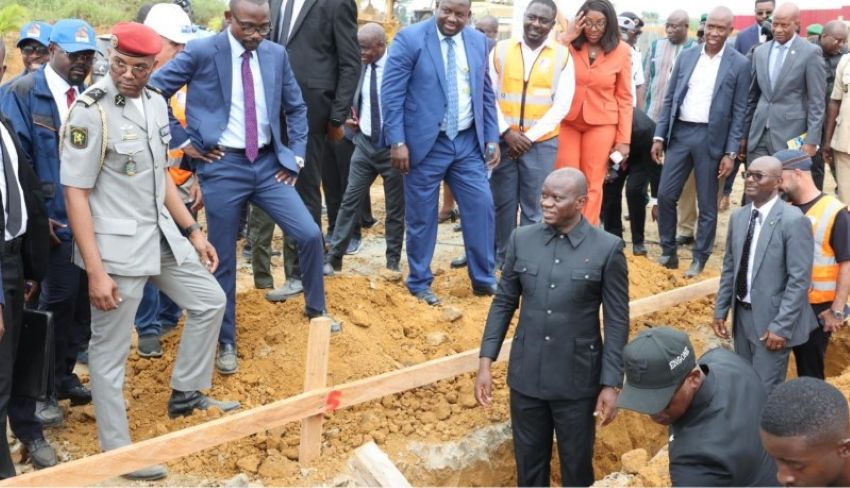
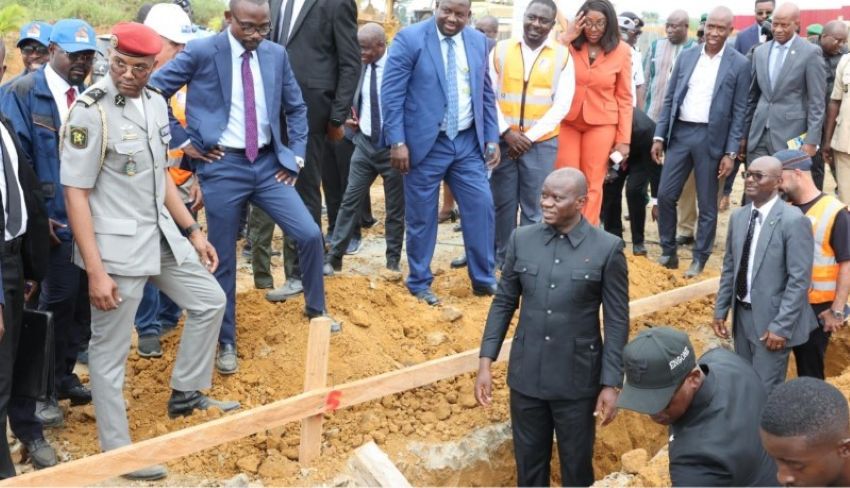
Libreville — In a political landscape where public discourse often vacillates between blind allegiance and cautious hesitation, President Brice Clotaire Oligui Nguema has reignited a vital conversation about the role of truth in governance. His recent remarks during the groundbreaking ceremony for 3,100 housing units in Bikélé Nzong underscore a bold stance on democratic accountability.
The head of state, addressing journalist Chamberlain Moukouma, emphasized that a leader’s duty extends beyond receiving applause to welcoming sincere criticism—when it serves the greater good of correcting public policy. This assertion transcends mere political rhetoric, delving into the core of democratic responsibility.
Challenging the culture of unquestioning support
By insisting that citizens must voice their concerns when leadership falters, President Oligui Nguema signals a deliberate departure from the entrenched tradition of automatic endorsement in Gabonese politics. His words challenge the notion that perpetual praise equates to political vitality, instead framing it as a potential pitfall that blinds collective progress.
The president’s stance reimagines the relationship between governance and the governed, advocating for a model rooted in transparency and shared accountability. In this vision, development cannot thrive on complacency but demands a clear-eyed assessment of both successes and shortcomings in public action.
Criticism as a catalyst for national progress
The presidential declaration elevates constructive criticism from the periphery to the center of national discourse. It frames truth-telling to power not as oppositional defiance but as a civic obligation integral to the public interest. Here, debate becomes a tool for refinement rather than confrontation, where a mature citizenry recognizes achievements while flagging inefficiencies to elevate governance quality.
This paradigm shift requires a cultural evolution. It calls for citizens, civil society, and media to adopt a posture anchored in objectivity, responsibility, and communal well-being. Criticism is no longer an end in itself but a lever for enhancing public policy effectiveness.
Redefining the language of political engagement
The president’s words reveal a broader philosophy of governance—one that prioritizes active listening, where citizen feedback steers policy direction. In this framework, national development is not dictated solely by top-down state decisions but emerges from a dynamic interplay between leaders and the people they serve.
The interview with Chamberlain Moukouma, disseminated across social platforms as a civic education initiative, reinforces this vision. It fosters a more informed and responsible public sphere, where dialogue replaces monologue and collective improvement takes precedence over individual acclaim.
At its core, this presidential statement invites a rethinking of Gabonese political culture around three guiding principles: praise when warranted, critique when necessary, and action always in the supreme interest of the nation. In a climate often dominated by performative postures, this call for shared truth stands as a litmus test for democratic maturity—placing the citizen not as a passive observer of power, but as its steadfast co-architect.