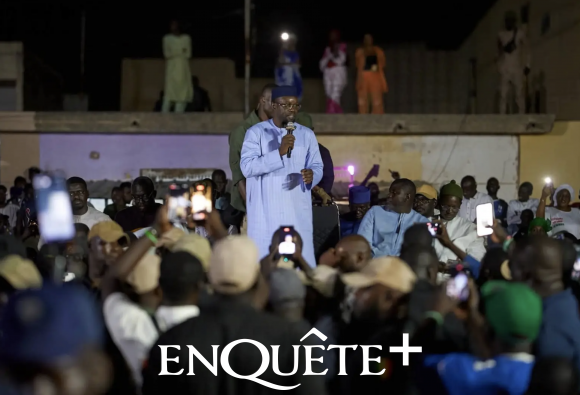
Pastef leader outlines bold vision for governance in Senegal

During a high-energy tour of the Diourbel region as part of Pastef’s « 48 heures de Pastef » campaign, Ousmane Sonko delivered a powerful message about his party’s financial independence and political vision. Speaking before energized crowds in Touba and Sadio, the opposition leader revisited the founding principles of his movement while addressing concerns about the current administration’s direction.
Financing a movement through grassroots strength
In a bold statement to supporters in Touba, Sonko underscored that Pastef operates entirely on member-driven funding, rejecting any reliance on public funds. This financial autonomy, he argued, reflects the party’s commitment to transparency and ethical governance—a stark contrast to traditional political financing models.
« Pastef does not dip into state coffers to fund its activities. Such practices are against our principles, » Sonko declared, drawing nods from the audience. Addressing skepticism about the surge in membership sign-ups, he shared a triumphant moment: « By mid-afternoon, all 13,000 membership cards distributed had already been purchased. We’ve had to place an additional order in Dakar. » His remarks highlighted not just the party’s popularity but its disciplined operational ethos.
Sonko also urged his followers to maintain focus amid political provocations. « Avoid unnecessary confrontations. If peace prevails in Senegal, Pastef will dominate every election in this country. No vote will slip through its fingers, » he declared, emphasizing the party’s strategic patience.
The legacy of the 2024 political shift
In Sadio, Sonko’s tone shifted to a more analytical reflection on the March 2024 political transition. He revisited his pivotal role in shaping the decision to back Bassirou Diomaye Faye after his own candidacy was disqualified, framing it as a historic necessity to preserve the movement’s momentum.
The speech also subtly questioned the current government’s adherence to its original commitments. While acknowledging public sentiment, Sonko hinted at a growing disconnect between the party’s foundational ideals and the executive’s actions, suggesting a divergence in priorities.
2026 and 2029: Milestones on the path to transformation
Looking ahead, Sonko positioned himself as the guardian of Pastef’s original vision, claiming 80% of the political groundwork had already been laid under his leadership. The upcoming 2026 and 2029 elections, he asserted, would be critical junctures to solidify these changes and ensure the movement’s long-term influence.
His rallying cry to militants was clear: stay the course, remain united, and let the party’s relentless momentum carry it to victory in every electoral contest.