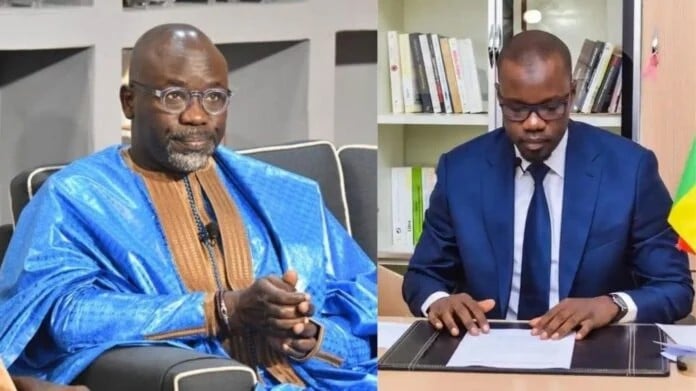
The political landscape in Senegal is undergoing a significant transformation following the departure of Ousmane Sonko from the government. In a sharp analysis, journalist and political commentator Cheikh Yérim Seck dissects this new phase, highlighting the challenges ahead and the critical need for Sonko to strengthen his ties with grassroots supporters to navigate uncharted territory.
Sonko’s strategic communication shift
During a recent appearance on a widely watched political show, Cheikh Yérim Seck provided a detailed breakdown of Ousmane Sonko’s evolving political strategy. The Pastef-Les Patriotes leader’s recent public statements were not just reactions to political upheaval—they were deliberate moves to re-engage with his core base of supporters. « Sonko’s address was not just a statement; it was a call to rally his militants, » Seck noted, emphasizing the importance of internal cohesion in this critical moment.
Navigating uncertainty in a changing political climate
Sonko’s transition from government insider to opposition figure marks a pivotal shift in Senegal’s political dynamics. Cheikh Yérim Seck underscored the risks Sonko faces, particularly the potential legal and political hurdles that could emerge as he charts this new course. « He now enters uncharted waters, » Seck observed, « having been part of the government but now standing outside it. The road ahead is uncertain, and his ability to maintain influence will depend heavily on his connection with his base. »
Sonko’s public remarks were not merely rhetorical—they were a calculated effort to reinforce commitment among his party’s leaders and activists. Cheikh Yérim Seck pointed out that the upcoming Pastef party congress could serve as a turning point for internal unity, offering an opportunity to solidify support and clarify the party’s direction amid shifting alliances.
A reshaped political landscape in Senegal
The changes within Pastef-Les Patriotes coincide with broader shifts in Senegal’s political arena. President Bassirou Diomaye Faye appears to be steering an independent political trajectory, further altering the balance of power. This evolving context presents both risks and opportunities for Sonko as he adapts to a role outside the corridors of government.
As Senegal’s political scene continues to evolve, the ability of key figures like Sonko to maintain relevance will hinge on their capacity to mobilize support and navigate the complexities of a rapidly changing environment. For observers and analysts like Cheikh Yérim Seck, the coming months will be critical in determining the next chapter of this political saga.