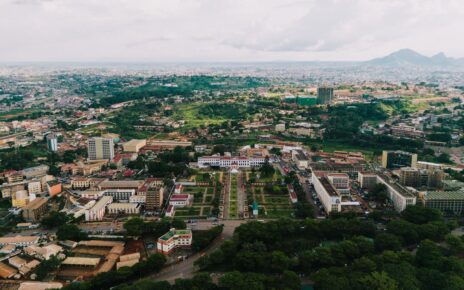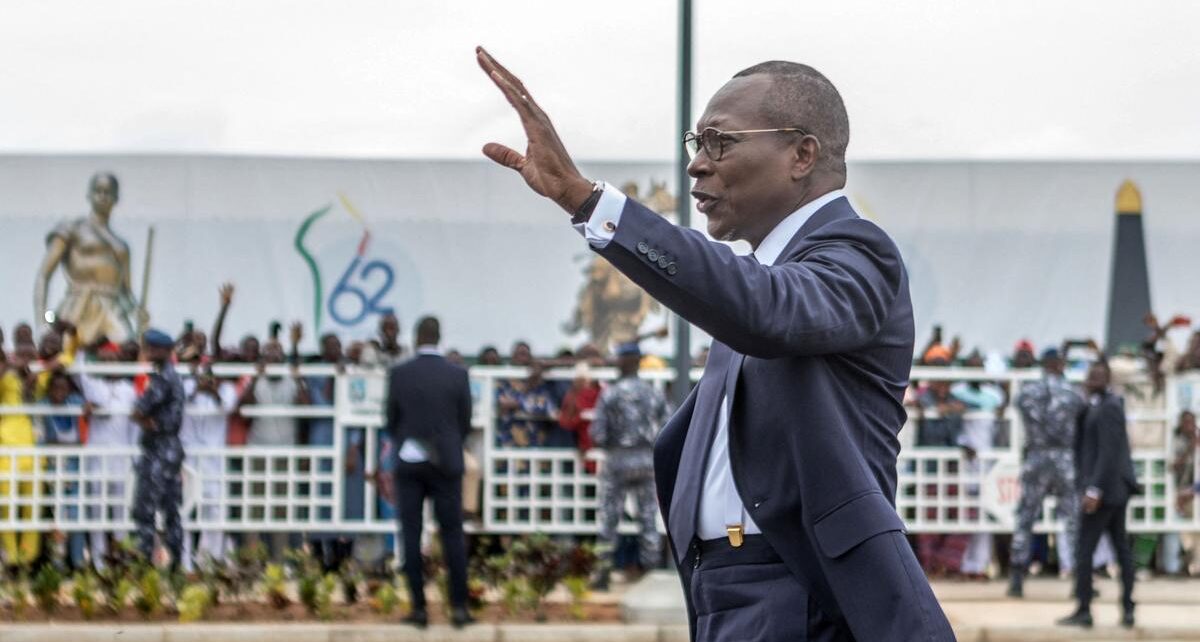
A wave of gunfire erupted in Cotonou, Benin’s economic hub, as a group of soldiers declared on national television they had removed President Patrice Talon from power. However, the country’s Interior Minister swiftly countered the announcement, asserting that the coup attempt had been thwarted.

what unfolded during the alleged coup attempt
Eight soldiers, donning berets in various colors and armed with assault rifles, announced themselves as the «Military Committee for Refoundation» (CMR) and declared they had deposed President Patrice Talon on national television. They proclaimed a lieutenant-colonel as their «CMR president» and cited multiple grievances, including what they described as a «deteriorating security situation in northern Benin», «neglect of fallen soldiers and their families», and «unfair promotions favoring less deserving individuals».
They also accused the government of covertly undermining «fundamental freedoms» while presenting social demands. Gunshots were heard in Cotonou, and soldiers blocked access to the presidential palace. Military personnel also controlled the national broadcaster, according to an AFP journalist. Several key areas, including the Sofitel hotel and neighborhoods housing international institutions, were cordoned off.
Despite the disruption, most residents continued with their daily routines.
Interior Minister Alassane Seidou later confirmed on television that the Beninese armed forces remained loyal to their oath and had successfully repelled the coup attempt. «This was the work of a tiny group with no real influence beyond the television studio,» he stated. «Regular forces have regained control, and Cotonou and the country are fully secure.»
According to military and security sources cited by AFP, a dozen soldiers, including the ringleaders of the coup attempt, were arrested.
who is president patrice talon
The President’s entourage told AFP that Patrice Talon was safe and that the military had reclaimed control of the capital. A military source confirmed the situation was «under control», emphasizing that the putschists had not reached the «presidential residence» or the «presidential palace». «It’s only a matter of time before normalcy is restored,» the source added. «The cleanup operation is progressing as planned.»
Patrice Talon is set to conclude his second term in April 2026, as the Beninese Constitution limits presidents to two terms. The upcoming election will feature the ruling party and a self-described «moderate» opposition candidate, as the main opposition party has been excluded from the race.
While Talon is credited with driving economic growth, critics accuse him of steering the nation toward authoritarianism, reversing its once-celebrated democratic strides.
international reactions to the coup attempt
The Economic Community of West African States (ECOWAS) strongly condemned the «unconstitutional action that subverts the will of the Beninese people», pledging «full support to the government and people of Benin» in a statement.
The African Union (AU) also issued a firm condemnation, calling the coup attempt «a blatant violation of constitutional order» and urging all involved to «immediately cease illegal actions» and return to their professional duties. AU Commission Chair Mahamoud Ali Youssouf took to X (formerly Twitter) to emphasize the need for a swift return to normalcy.
historical context of political instability in Benin
Benin’s political landscape has been marred by multiple coups and attempted takeovers. In October 1963, Colonel Christophe Soglo led a military coup, ousting the government. After briefly restoring civilian rule in 1964, soldiers reclaimed power in December 1965, reinstalling Soglo as leader of the National Renovation Committee. Another coup in 1969 deposed Émile Derlin Zinsou, replacing him with a military directorate led by Paul Emile de Souza.
More recently, Benin experienced two coup attempts during Patrice Talon’s presidency, in 2020 and September 2024. The broader West African region has seen a surge in coups since 2020, affecting nations like Mali, Burkina Faso, Niger, Guinea, and Guinea-Bissau, where a coup occurred in late November 2025.