
Operating a nation from afar demands more than just a laptop and an internet connection. When the head of state is abroad, every instruction, signature, and decision must be backed by robust digital infrastructure that guarantees confidentiality, authenticity, and traceability. This challenge has taken center stage in Cameroon, where President Paul Biya continues to lead the country despite occasional absences from national territory.
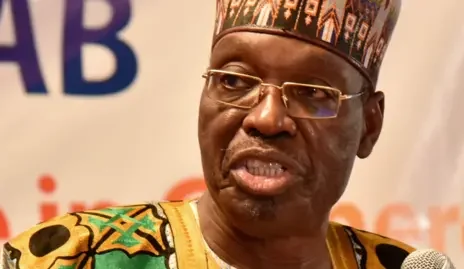
The debate was reignited by a statement from the Minister of Higher Education, Jacques Fame Ndongo. In response to concerns about a potential leadership gap, he emphasized that the President remains actively engaged—whether in person or through established electronic channels. Yet the question remains: what secure digital tools should the Presidential Administration use to receive, review, approve, and archive sensitive documents while the Head of State is outside the country?
Publication on social media represents only the final step in the decision-making chain. It reveals little about how documents are drafted, transmitted, examined, signed, registered, and preserved. The real concern lies in the digital pathways behind every decree or administrative act.
Institutional email: the first line of defense
A secure presidential workflow begins with a dedicated institutional email system under the official domain @prc.cm. Every advisor, secretary, and civil servant involved in state affairs should have a unique, traceable email address tied to this domain—not personal accounts such as Gmail or Yahoo.
Why not rely on commercial platforms? Because personal accounts fall outside state control. Authorities cannot fully oversee their creation, usage, device access, message retention, or deactivation after personnel changes. An institutional mailbox, by contrast, enables systematic account management, enforces multi-factor authentication, logs all communications, detects unauthorized access, blocks automatic forwarding to personal inboxes, and applies uniform security policies.
To prevent identity theft and phishing, the system should integrate SPF, DKIM, and DMARC protocols. All server-to-server communications must be encrypted. However, even a secure institutional address is not suitable for transmitting highly classified files. Instead, it should serve as a notification system—alerting recipients that a document is ready for review within a secure presidential platform.
A presidential document management platform
A state-of-the-art electronic document management system should be at the heart of presidential operations. Each file should be assigned a unique identifier, tagged with its author, classified by sensitivity level, and accessible only to authorized personnel. The system must track every version, comment, validation, timestamp, and full access history.
With such a platform, the President—or any authorized official—can access a document from a secure terminal, add annotations, request modifications, or approve a proposal without duplicating files across devices or forwarding them to personal mailboxes. For top-secret files, the system should prevent local downloads, printing, text copying, or unauthorized sharing. It must also record who viewed the document, when, from which device, and what changes were made.
Electronic presidential signatures: tamper-proof validation
A scanned image of a signature is insufficient for official acts. A legitimate electronic signature must be based on certified digital certificates that verify:
- the signatory’s identity;
- the document’s integrity;
- the exact time of validation;
- the absence of post-signature alterations.
The cryptographic key used for the most critical decisions must be stored in a high-security hardware module—not on a regular computer, USB drive, or personal phone. Every use of this key should require direct presidential authentication and generate a time-stamped audit trail. For major decrees, the process could include multiple layers: presidential approval, technical signature verification, legal review, official registration, and public release.
Zero Trust architecture: no shortcuts to access
A virtual private network (VPN) can secure remote connections, but it should not be the sole safeguard. A modern administration should adopt a Zero Trust model—where no user, device, or network is trusted by default. Each access request must be authenticated based on multiple criteria:
- user identity;
- device authentication;
- geolocation verification;
- document sensitivity level;
- assigned user privileges;
- behavioral analysis during the session.
Accessing a presidential file might require an institutional laptop, a digital certificate, an encrypted connection, a physical security key, and a local biometric scan—all simultaneously.
Exclusively institutional devices
No classified document should ever be opened on a personal smartphone or computer. Civil Cabinet members, the General Secretariat, and other officials handling state affairs must use devices owned and managed by the institution. These terminals should be fully encrypted, regularly updated, restricted to approved applications, and segregated from personal use. They must support remote wiping in case of loss, auto-lock after brief inactivity, and automatic blocking of connections to unsecured public Wi-Fi networks.
A centralized device management system allows administrators to push updates, block unsafe apps, revoke devices, and remotely erase data if compromised or stolen.
Multi-factor authentication to thwart phishing
A complex password alone is inadequate for presidential systems. Authentication should combine:
- an institutional device;
- a personal code;
- a physical security key;
- optionally, a local biometric scan.
SMS-based codes add a layer of security but remain vulnerable to certain attacks. For the most sensitive accounts, hardware keys and digital certificates offer stronger resistance to phishing attempts. Staff must also be regularly trained to recognize fake messages, urgent fraudulent requests, malicious links, and impersonation attempts targeting superiors.
WhatsApp: useful for alerts, not for documents
End-to-end encryption makes WhatsApp attractive for communication, but it is not a secure platform for sharing classified files. Risks include lost or hacked phones, screenshots, unauthorized sharing, weak backup protection, or lingering data on devices of former staff. WhatsApp also lacks features for document classification, access management, version control, electronic signing, and official archiving.
The app can, however, serve as a coordination tool—alerting officials that a file is available in the secure presidential platform. For example: “The document referenced PRC/SG/2026/125 is ready for your review in your secure workspace.” The file itself should never be attached.
Secure government videoconferencing
Remote discussions between the President and advisors should occur on a dedicated, government-grade videoconferencing platform. This system must ensure:
- end-to-end encryption;
- verified participant identities;
- strict invitation controls;
- prohibition of unauthorized recordings;
- comprehensive session logs;
- use of institutional devices only;
- full data hosting sovereignty.
Public links, free accounts, and unverified applications have no place in high-stakes meetings on defense, diplomacy, appointments, or government arbitrations.
Document classification: matching tools to risk levels
Not all presidential documents carry equal risk. A clear classification policy could create four tiers:
- Public: intended for public release;
- Internal: restricted to government services;
- Confidential: disclosure could harm public action;
- Highly Sensitive: related to defense, intelligence, diplomacy, strategic appointments, or major arbitrations.
Each level determines the allowed transmission channel, authorized personnel, permissible devices, printing rules, retention periods, and archiving procedures. A public document may be sent via institutional email, while a highly sensitive file should only be accessible through a tightly controlled platform.
Full traceability: every action recorded
Every consultation, modification, approval, or transmission must be automatically logged. The security journal should detail:
- who accessed the document;
- when and from which device;
- what changes were made;
- who validated the final version;
- when it was archived and published, and by whom.
A dedicated security operations center can detect unusual activity, such as connections from unrecognized devices, bulk downloads, or abnormal modifications to official acts. This traceability also enables reconstruction of events in case of leaks, intrusions, or disputes over the authenticity of a decision.
Ten priorities for a modern presidential administration
The Presidential Administration could implement ten essential measures:
- Mandate institutional email under @prc.cm for all official correspondence;
- Ban personal Gmail, Yahoo, and similar accounts for state business;
- Deploy a secure presidential document management platform;
- Introduce certified electronic signatures with hardware-based key storage;
- Equip all staff with exclusively institutional phones and computers;
- Enforce phishing-resistant multi-factor authentication;
- Restrict WhatsApp to alerts and coordination, not file transfers;
- Classify documents by sensitivity level and apply corresponding protocols;
- Centralize access logs in a security supervision center;
- Train staff regularly on espionage risks, phishing, and information leaks.
While no public evidence confirms Cameroon’s Presidential Administration currently uses all these systems, they represent the minimum standards for any modern state institution responsible for remotely managing sensitive matters of finance, diplomacy, security, and national continuity.
Sovereignty, security, and the digital continuity of the state
The question is not simply whether a president can work from Geneva, Paris, or New York. The real challenge is whether the tools used can authenticate decisions, protect state secrets, trace instructions, and ensure no one can alter, divert, or forge an act in the President’s name. In an era of artificial intelligence, cyberattacks, and digital forgeries, the state must rely on modern, auditable systems. Every critical decision must leave a clear digital footprint: who posted what, validated what, when, through which channel, and under what security guarantees?