- Featured
- Politics
Senegal minister attacks Sonko’s victimization claims in defense of Faye
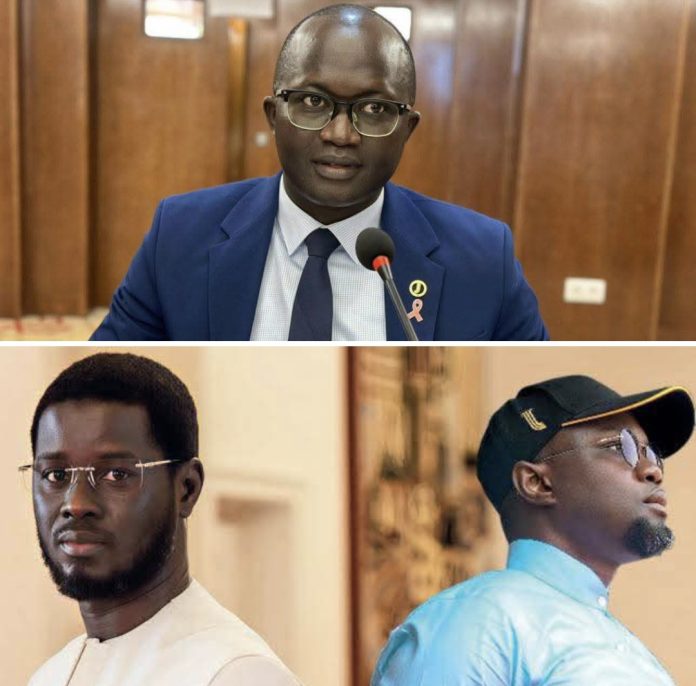
Senegal’s Minister of Communication, Yankhoba Diémé, has launched a sharp rebuttal against former Prime Minister Ousmane Sonko, accusing him of orchestrating a campaign of manufactured victimhood aimed at undermining President Bassirou Diomaye Faye’s leadership.
In a candid interview, Diémé described Sonko’s tactics as a deliberate distortion of reality, where “self-centered narcissism and accumulated deceitfulness ultimately cast the victim as the aggressor.”
Compensation delays: clearing the president’s name
Addressing public frustration over the delayed payments to former detainees, the minister categorically rejected claims that President Faye was responsible for the holdups.
“The notion that the president is to blame for the payment delays is completely unfounded,” Diémé stated. “He issued clear directives during a Council of Ministers meeting, instructing the Prime Minister and the Minister in charge of Family Affairs to expedite the process.“
Questioning Sonko’s donation claims
The minister also challenged the narrative surrounding Ousmane Sonko’s alleged donation of his four-million-franc CFA salary to victims. While Sonko’s gesture drew praise, Diémé emphasized that the state’s obligations in this matter extend beyond individual contributions.
Political funds controversy: a missed opportunity?
Diémé raised eyebrows over reports of the Prime Minister’s discretionary political funds, totaling 1.77 billion francs CFA. “It was revealed that the Prime Minister had access to substantial political funds,” he noted. “With such resources available, compensating victims should have been a straightforward process.”
The minister backed his argument with financial simulations, underscoring how these funds could have expedited resolutions for affected individuals.
Constitutional reform: a betrayal of dialogue
Turning to the recent constitutional amendments, Diémé condemned what he termed a “parliamentary swindle,” alleging that some political actors had exploited the president’s call for national dialogue to push through self-serving amendments.
“The president urged inclusive dialogue, but the outcome reflected a blatant distortion of that spirit,” he asserted.
Macky Sall’s return: navigating legal and political boundaries
On the return of former President Macky Sall to Senegal, Diémé defended President Faye’s handling of the situation, emphasizing the legal constraints governing proceedings against former heads of state.
“Critics claim the president has changed his stance by allowing Sall’s free movement under state protection,” he said. “However, Faye is merely fulfilling his constitutional duties. Sall faces no legal charges, and Senegal’s laws strictly regulate any potential proceedings against former presidents.”
“Young agitators must understand that only lawmakers can initiate high treason proceedings,” Diémé added. “Accusing individuals without evidence and then positioning oneself as a hero is neither just nor constructive.”
He concluded by stressing that if Macky Sall provides necessary clarifications on pending matters, a respectful exchange with President Faye would align with the country’s republican values.