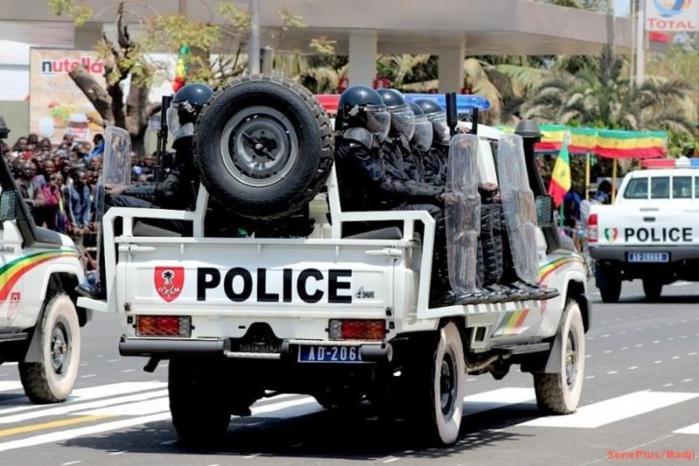
The Senegalese capital has seen a sharp increase in police checks targeting foreigners, raising questions among civil society groups and foreign residents. Within eight days, authorities conducted 490 inspections, resulting in 36 cases being referred to the public prosecutor for irregular stay violations. These operations, framed as routine administrative verifications, have sparked growing unease about a perceived shift toward suspicion toward foreign nationals living in the country.
Daily realities for foreign residents
Amadou Bangoura, a 30-year-old student from Bénin who has lived in Dakar for five years, recently experienced this unsettling shift firsthand. One evening, as he left a gym in the Liberté 6 district, a police patrol stopped him and demanded to see his documents. Caught off guard, he admitted they were at home. Panic set in—what if he were sent back? What if he faced detention or prosecution? The officers decided to verify his claims and accompanied him home, where he presented his valid passport and residency documents. The incident ended without consequences, but the encounter left a lasting impression.
Bangoura’s experience is not unique. Over the past weeks, foreigner verification operations have intensified across Dakar and its suburbs under the banner of enhancing public safety. Official figures confirm the scale of these checks: between June 30 and July 8, the Direction de la police des étrangers et des titres de voyage (DPETV) conducted sweeping inspections in multiple neighborhoods. Nearly 490 foreigners of various nationalities were controlled, with 36 cases referred to the judiciary for irregular stay.
Civil society warns against arbitrary measures
Human rights and migrant advocacy groups have raised alarm over the trend. In a joint statement released on July 13, organizations including Legs Africa, Frapp, Nawle, Afrikajom Center, and Diwan Citoyen expressed deep concern over what they describe as an escalation of administrative measures targeting foreigners residing or visiting Senegal.
The groups acknowledge that every state has the sovereign right to regulate border control and combat irregular migration. However, they caution that sovereignty must not be confused with arbitrariness. The statement highlights a growing concern: the normalization of suspicion toward foreigners, which risks reducing their legal status to one of perpetual bureaucratic scrutiny rather than recognition as rights-bearing individuals.
Balancing security and hospitality
Elimane Kane, president of Legs Africa, emphasizes that security and hospitality are not mutually exclusive values in Senegal. While acknowledging the state’s responsibility to monitor borders and verify identities, he warns against framing these operations as a rejection of foreigners. “Security does not exclude otherness,” he stresses, calling for better coordination among security forces to prevent these checks from being perceived as persecution rather than regulation.
Kane also points to the broader context of global mobility. “Just as Senegalese citizens seek opportunities abroad, foreigners have the right to come here and work,” he says. The solution, he argues, lies not in blaming migrants but in addressing the lack of opportunities for young Senegalese to access gainful employment at home.
Photo: A police patrol conducts a routine check in Dakar. Credit: [original source image reference preserved]