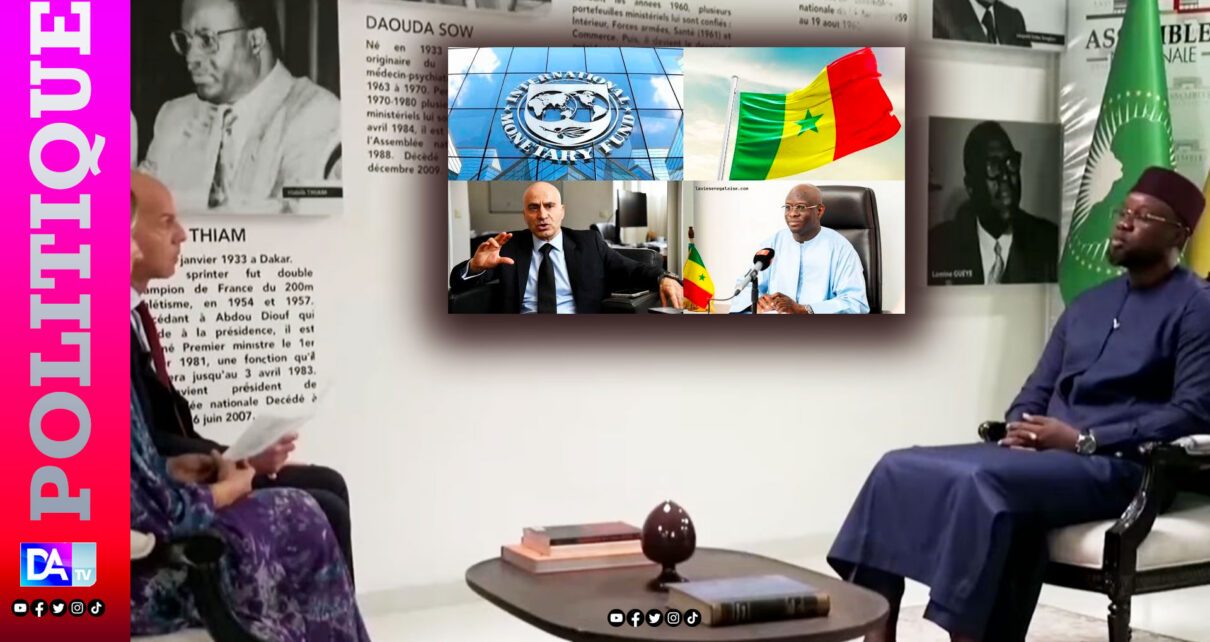
The National Assembly President, Ousmane Sonko, has delivered a candid assessment of Senegal’s debt management under his tenure as Prime Minister, while firmly setting red lines for future financial decisions. In a rare public reflection on his two years in government, Sonko addressed mounting concerns over the country’s debt levels and the anticipated arrival of an International Monetary Fund (IMF) mission to Dakar. His remarks came amid growing speculation about a potential debt restructuring, a scenario he dismissed outright as premature and unnecessary.
Speaking with unfiltered honesty, Sonko rejected any suggestion of ideological rigidity in Senegal’s debt strategy. « We are not bound by absolute positions. Our approach must be pragmatic and grounded in reality, » he emphasized. However, he quickly clarified that his administration had consistently opposed reckless restructuring, arguing that the conditions simply did not exist when he served as Prime Minister. « Senegal was not in default, and we met all our obligations, » he stated, warning that any move to prioritize short-term financial ratios over systemic change would be met with resistance. « The National Assembly will exercise its constitutional powers to block such decisions, » he vowed.
Addressing criticism about his government’s continued reliance on international lenders despite his past calls for economic sovereignty, Sonko defended the administration’s commitment to transparency. « We chose to operate with full disclosure, knowing that hiding the truth would only lead to bigger problems later, » he explained, drawing parallels to Greece’s debt crisis. « Debt refinancing and renewal are realities in every country. What matters is responsible management of those obligations, » he asserted.
The conversation took a deeper turn when Sonko was pressed on the issue of « odious debt »—a term he had previously used to describe certain financial obligations. He acknowledged the moral and political complexities of the debt question, conceding that his hands were tied during his time in office. « The powers of a Prime Minister in this country are limited, » he admitted, drawing a clear distinction between his role as a political leader and the constraints of governance. « I never wavered in my stance, but institutional realities required measured action. » He also confirmed that his views aligned with President Diomaye Faye’s position, noting that the President had recently reaffirmed their shared approach.
Looking ahead, Sonko struck a more provocative tone, calling for political courage in confronting Senegal’s debt burden. « This debt is partly odious, and it will take bold leadership to address it, » he declared, urging the current government to take responsibility for initiating discussions on partial debt cancellation. His words carry particular weight as someone who played a key role in the previous administration, now positioning himself as a voice of accountability for the nation’s financial future.