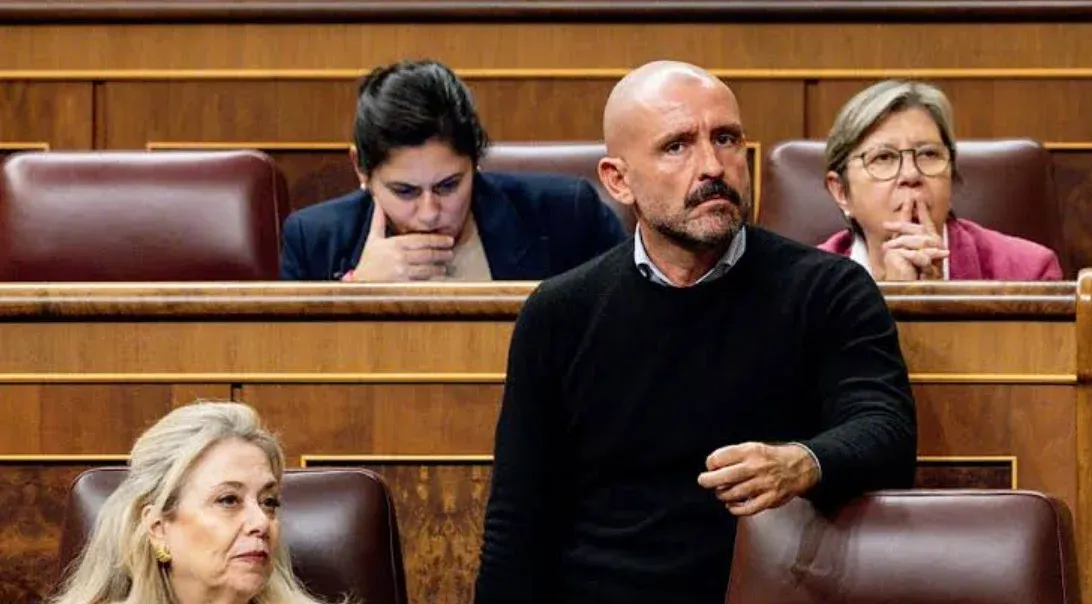
The political storm triggered by Morocco’s Justice Minister Abdellatif Ouahbi’s statements on Ceuta and Melilla shows no sign of abating in Madrid. Since the July 30-31 migration surge toward Ceuta, Ouahbi’s remarks about the disputed status of the two enclaves have reignited a heated debate in Spanish political circles.
Political fallout intensifies over Moroccan minister’s remarks
The Spanish government now faces mounting pressure from the opposition Partido Popular (PP), which is demanding an immediate summoning of Morocco’s ambassador for official consultations. The PP’s call comes in response to both Rabat’s renewed stance on the enclaves and the recent border crisis at Ceuta, where thousands of migrants attempted to cross into Spanish territory.
PP challenges government response amid diplomatic tensions
During a visit to Barcelona, PP lawmaker Jaime de los Santos accused the government of inconsistency, pointing to Madrid’s swift action in summoning Italy’s ambassador after Rome suspended the Schengen Agreement. He questioned why a similar response hadn’t been applied to Morocco, despite the mass migrant crossings at Ceuta and Ouahbi’s sovereignty-related remarks.
Beyond the ambassadorial summons, the PP has filed written questions in Spain’s Congress, demanding immediate clarification from Justice Minister Félix Bolaños on all exchanges with his Moroccan counterpart since the migration crisis began. The conservative party also raised concerns over potential Moroccan threats to suspend the bilateral extradition treaty, a mechanism the PP argues is critical for managing border crossings and repatriations.
With the opposition weaponizing the diplomatic spat against the government of Pedro Sánchez, and Madrid yet to adopt a firm stance, the dispute over Ceuta and Melilla remains far from resolved.