Nigeria’s president returns amid independence countdown with reform agenda under scrutiny
The arrival of Nigerian President Bola Ahmed Tinubu in Lagos on September 29, 2026, after an extended four-week stay in Europe, is sparking behind-the-scenes analysis of the trip’s true purpose. While officially framed as a working vacation, the president’s prolonged absence from Abuja just two days before Nigeria’s 66th independence anniversary has intensified public discourse on governance, health narratives, and the nation’s political trajectory.
Why Lagos, not Abuja? The symbolic return to Nigeria’s economic hub
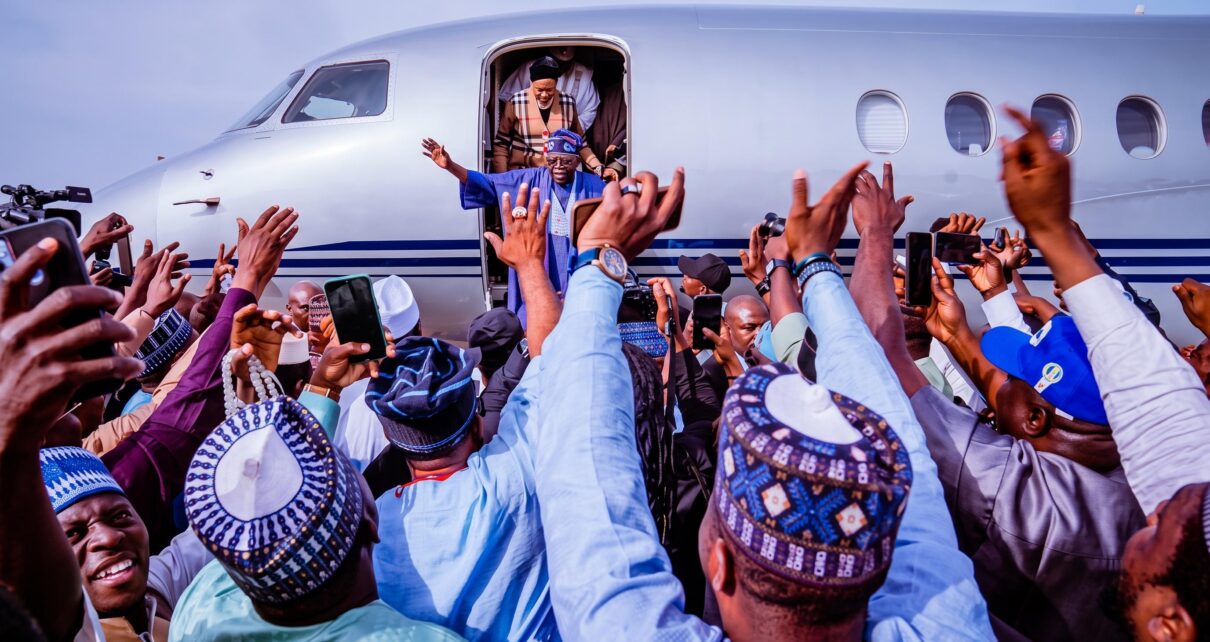
Air Force One touched down at Lagos’s international airport at 18:22 local time, marking the end of a journey that began in Abuja on August 30. Rather than returning to the federal capital, Tinubu chose Nigeria’s commercial nerve center—a decision the presidency attributed to honoring Moshood Kashimawo Olawale Abiola, the late democracy icon whose 1993 election victory was annulled. The president’s schedule reflects this emphasis: a film premiere about Abiola at the Wole Soyinka National Theatre precedes independence-day events under the theme *‘From Reforms to Stability: Consolidating Nigeria’s Renewed Hope for Shared Prosperity.’*
A working vacation or strategic retreat?
Initial plans described a three-week break, but Nigeria’s leader extended his stay by several days. During his European itinerary—starting in London and culminating in Paris—he met with global figures including French President Emmanuel Macron and businessman Vincent Bolloré. A high-profile memorandum of understanding worth $7 billion between Ogun State and DP World for a deep-sea port project was also signed, though analysts caution against conflating diplomatic moves with domestic outcomes.
The presidency insisted the trip was a “working vacation,” allowing Tinubu to oversee state affairs remotely while engaging in private consultations. Yet the absence drew scrutiny, particularly as Nigeria’s vice president represented the country at the UN General Assembly rather than the president himself. At the tarmac, Tinubu addressed health rumors directly: *“I am healthy, sound, and ready to serve.”*
Independence-day agenda: Celebrations and political undercurrents
With the anniversary looming, Tinubu’s Lagos itinerary intertwines commemoration with preparation for 2027’s electoral cycle. State broadcaster NTA will air his national address on October 1, while a public debate on the country’s future precedes it. Political observers note that every ceremonial appearance during this period is also an opportunity to reinforce the administration’s reform narrative ahead of next year’s presidential primaries.
Rising expectations and lingering questions
Tinubu’s prolonged absence has fueled speculation about his capacity to lead during critical moments. The gap between official explanations and public perception highlights a broader tension: can Nigeria’s economic reforms and social stability goals survive shifts in global priorities? As the president re-engages in Lagos, the dual focus on independence festivities and political consolidation will test both his leadership and the public’s trust in a government promising renewed prosperity.
With Lagos’s energetic corridors as the backdrop, Nigeria stands at a crossroads where symbolism meets pragmatism—one where a carefully choreographed return may prove decisive for the year ahead.
President Bola Tinubu disembarks from his plane in Lagos, marking the end of a four-week European visit.