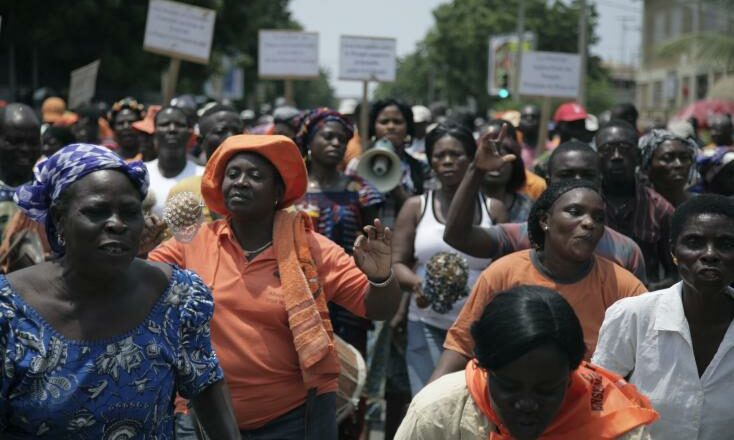
Hundreds of demonstrators took to the streets of Vogan in southern Togo on Sunday, voicing their opposition to the 2024 constitutional reforms. Critics argue these changes are designed to extend the tenure of President Faure Gnassingbé, who has held office since 2005.
The protest, spearheaded by the Cadre national de concertation pour le changement au Togo (CNCC)—a coalition of opposition parties and civil society groups—marked the second major rally in three months. The first gathering, held in early May, drew attention to what opponents call an illegitimate power grab.
Participants carried signs with messages like “No to unconstitutional government changes” and “Constitutional coup”, condemning the reforms as a violation of democratic principles.
David Dosseh, spokesperson for the Front citoyen Togo debout (FCTD), one of the driving forces behind the movement, emphasized the gravity of the situation. “The 2024 Constitution is entirely illegal. It represents a constitutional coup that Togolese citizens will never accept,” he declared.
The revised Constitution, enacted in 2024, significantly alters Togo’s political landscape. It replaces the direct election of the president with a parliamentary system, where the President of the Council—now the country’s top executive position—is occupied by Gnassingbé. While the government frames the reform as a step toward stronger institutional representation, opponents argue it is a thinly veiled attempt to perpetuate his rule.
Unrest linked to the reforms has already resulted in deadly confrontations in 2025, with civil society reporting seven fatalities, while prosecutors cite five deaths by drowning. Adding fuel to the fire, the Economic Community of West African States (ECOWAS) Court of Justice ruled on January 29 that the changes amounted to an “unconstitutional change of government.”
The government swiftly rejected the ruling, asserting that the court overstepped its authority. Officials contended that the court’s mandate is limited to human rights and community law compliance, with no jurisdiction over domestic constitutional matters.