The United Nations Raises Alarm Over Daech’s Growing Threat in Critical African Regions
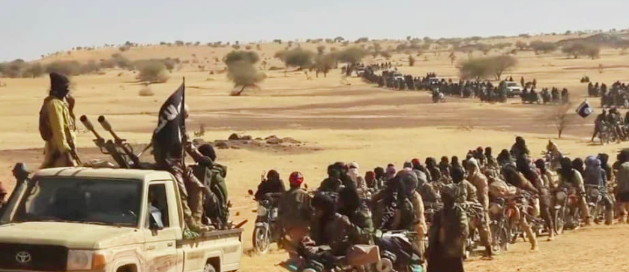
In a newly released assessment, the United Nations has highlighted a persistent and escalating terrorist threat in some of Africa’s most volatile regions, particularly the Sahel and the Lake Chad Basin. Despite efforts to dismantle its central leadership, Daech—a group originally rooted in Iraq and the Levant—continues to expand its influence through autonomous regional branches that exploit local vulnerabilities.
The findings, presented by Oguljeren Niyazberdiyeva of the United Nations Office of Counter-Terrorism (UNOCT), underscore that the Islamic State’s West African Province (ISWAP) remains the group’s most operationally active affiliate worldwide. Military reports indicate that ISWAP is not only sustaining its activities but also enhancing its combat capabilities by integrating commercially available drones for surveillance and tactical strikes.
Key Regions Under Pressure
The UN report identifies the Sahel and the Lake Chad Basin as the primary theaters where Daech’s regional networks are consolidating their presence. While military operations have weakened the group’s central command, its decentralized structure now allows individual cells to thrive independently, adapting rapidly to local conflicts and governance gaps.
In the Democratic Republic of the Congo (DRC) and Mozambique, affiliated factions continue to launch offensives despite sustained counterterrorism efforts by national and regional forces. These groups remain active in recruitment, expanding their influence through localized propaganda and financial networks.
Technological Adaptation and Global Threats
One of the most concerning developments highlighted in the report is Daech’s increasing reliance on advanced technologies. The group is leveraging artificial intelligence, encrypted communications, and unmanned aerial systems to refine its propaganda, fundraising, and attack planning. This digital evolution poses new challenges for security agencies, necessitating stronger international cooperation and partnerships with private sector stakeholders to monitor and disrupt these activities.
The UN emphasizes that while technology can be weaponized by terrorists, it can also serve as a powerful tool in counterterrorism when deployed responsibly under international legal frameworks. Strengthening global cybersecurity measures and enhancing technological governance are critical steps in mitigating this evolving threat.
Persistent Challenges Despite Operational Setbacks
Despite significant military successes against Daech’s core leadership, the group’s ideology continues to resonate in fragile states where political instability, economic hardship, and prolonged conflicts create fertile ground for recruitment. The UN warns that the group’s ability to decentralize operations and exploit local grievances makes it a resilient and adaptive adversary.
‘’Daech has undergone a profound transformation in its operational model to survive sustained military campaigns. While its capacity to orchestrate large-scale international attacks has diminished, the group remains a grave threat to global peace and security,’’ stated Oguljeren Niyazberdiyeva in her assessment to the UN Security Council.
The report calls for a more coordinated international response, combining military pressure with socio-economic development initiatives to address the root causes of extremism in affected regions.