Peace and stability in west africa hinge on deeper cooperation
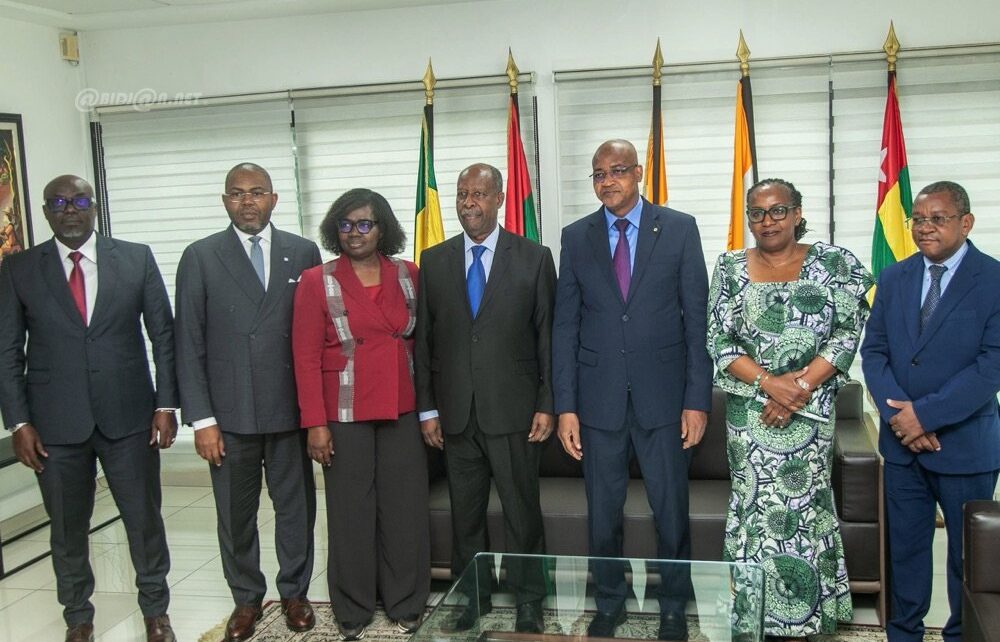
The Entente Council and the United Nations Office for West Africa and the Sahel (UNOWAS) have finalized a three-year Memorandum of Understanding in Abidjan—Cocody, designed to strengthen their strategic alliance in support of peace, stability, and regional cooperation across West Africa and the Sahel. Unlike conventional alliances, this partnership is rooted in the recognition of persistent structural vulnerabilities rather than immediate crises alone.
This shift reflects a deeper understanding of the region’s multifaceted challenges: recurring political instability, cross-border conflict spillovers, weak institutional resilience, and the erosion of social cohesion in communities already strained by climate change and economic disparities. Rather than responding to crises reactively, both entities are aligning their long-term strategies to preempt and mitigate risks from the ground up.
What drives this partnership beyond the headlines?
The Memorandum is not just another policy document—it is a strategic pivot rooted in three core operational imperatives:
- Early warning and preventive diplomacy: Moving beyond traditional mediation, the partnership emphasizes real-time intelligence sharing and joint diplomatic initiatives, including strategic consultations and good offices missions designed to de-escalate tensions before armed confrontation arises.
- Community-led peacebuilding: Recognizing that sustainable peace begins in communities, the agreement prioritizes youth and women-led peace initiatives, with targeted programs to strengthen social cohesion along fragile borders where state presence is limited.
- Institutional capacity-building: A less visible but crucial dimension involves strengthening the Entente Council itself—through joint analytical studies, shared databases, and technical assistance—to enable faster, more coordinated responses to security threats across member states.
A platform for diplomatic convergence in a fractured region
One of the most significant unstated roles of this agreement is its potential to serve as a neutral diplomatic bridge. The Entente Council—comprising six West African nations, including both Sahelian and coastal states—has historically operated as an underrated platform for dialogue. This memorandum elevates that role, positioning it as a mediator not only between member states but also between regional blocs that often operate in parallel.
The agreement creates a formal mechanism for annual joint workplans, designated focal points, and routine monitoring consultations. Regular joint missions—whether for dialogue, assessment, or facilitation—are now institutionalized, reducing the risk of fragmented or inconsistent approaches to common threats.
Statements that reveal deeper strategic intent
Statements from key leadership during the signing ceremony underscore a shared understanding of peace as a continuous process, not a final state. Leonardo Simão, UN Special Representative for West Africa and the Sahel, emphasized the fragility of peace even in stable areas: “Peace is never fixed—it must be actively maintained where it exists and restored where it does not.”
He highlighted the Entente Council’s historical legacy—founded in 1959 and predating both the African Union and ECOWAS—as a source of institutional wisdom. Its longevity and inclusive membership (spanning Sahelian and coastal states) reflect a unique capacity to navigate diverse political and security landscapes.
Idi Ali, Interim Executive Secretary of the Entente Council, framed the agreement as a response to the current security moment: “The Council offers a privileged platform to consolidate peace in the subregion.” He underscored the importance of uniting Sahelian resilience with coastal stability—a balance critical to preventing cross-border threats from spiraling into broader crises.
What this means for communities, now and over three years
Beyond geopolitical strategy, this partnership aims to deliver tangible benefits to everyday citizens. Over the next three years, the framework supports:
- Local mediation networks in border regions, especially in areas with weak state authority.
- Training programs for youth and women mediators, empowering them to play active roles in conflict prevention.
- Joint risk assessments and joint rapid response mechanisms during crises, reducing delays in assistance.
The memorandum’s duration—three years—is not arbitrary. It reflects a realistic timeline: long enough to implement foundational reforms, yet short enough to allow mid-course adjustments based on evolving threats or successes. Annual reviews will assess progress, not just diplomatically, but at the community level.
A foundation built on shared vulnerabilities
This is not a partnership born of optimism. It is forged in the understanding that West Africa’s stability is still negotiable. The Sahel remains a regional pressure point, and political fractures in coastal states threaten to destabilize neighbors. By institutionalizing joint analysis, joint operational capacity, and community-centered resilience, the Entente Council and UNOWAS are not just signing an agreement—they are laying the groundwork for a new phase of regionally owned peacebuilding.