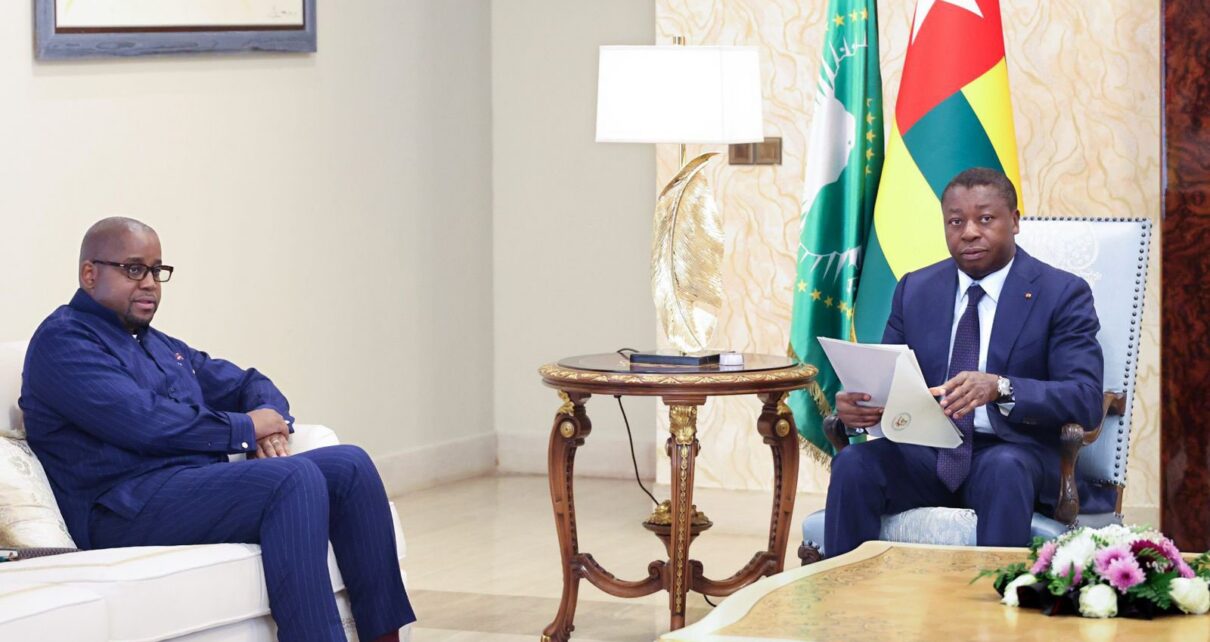
On September 29, 2026, Togo’s president Faure Gnassingbé held a high-stakes meeting in Lomé with Congolese Minister of Regional Integration Floribert Anzuluni. The closed-door encounter, part of an ongoing diplomatic push, was not just a formal reception—it marked a pivotal moment in the behind-the-scenes negotiations reshaping the peace process in eastern Democratic Republic of the Congo (DRC).
At the heart of the discussion was a sealed message from DRC President Félix Tshisekedi to Faure Gnassingbé. Delivered directly by Minister Anzuluni, the correspondence outlined critical updates on the peace process in eastern DRC, where armed group disarmament programs are advancing—slowly but steadily. The contents also highlighted the strategic role Faure Gnassingbé plays as the African Union’s lead mediator in the crisis.
During the meeting, Anzuluni provided a detailed briefing to Faure Gnassingbé on recent developments in Kinshasa’s efforts to demobilize armed factions. These steps are widely seen as essential to restoring lasting peace in a region ravaged by years of conflict, where civilian communities continue to bear the heaviest burden.
Inside the Togo-led mediation: What’s driving the shift in Congo’s eastern peace talks
Faure Gnassingbé’s mediation—officially appointed by the African Union in April 2025—has evolved into a central pillar of regional peace efforts. Lomé has increasingly become the neutral ground where conflicting parties are encouraged to re-engage, and where sustainable ceasefire commitments begin to take shape.
Behind this evolving diplomacy lies a carefully coordinated strategy. Since assuming the mediation role, Faure Gnassingbé has steered a series of high-level meetings and strategic consultations in the Togolese capital, each designed to:
- Reinvigorate political dialogue among Congolese stakeholders
- Strengthen regional consensus on ceasefire enforcement
- Harmonize diverse peace initiatives into a unified framework
- Build trust between Kinshasa and rebel factions critical to long-term stability
The September 29 audience was not an isolated event. It followed a broader pattern of intensified Togolese-led engagement, including closed-door consultations with international partners and regional facilitators. The goal: to uncover the root causes of the conflict and address them through targeted peacebuilding measures.
Why Lomé matters more than ever in Congo’s peace roadmap
The choice of Lomé as a hub for these negotiations is no accident. Togo’s neutral standing in regional politics, coupled with a reputation for quiet, effective diplomacy, has positioned it as a trusted intermediary in complex geopolitical crises.
Unlike public summits where rhetoric often overshadows substance, the Lomé process thrives on discretion and depth. It allows for candid exchanges between conflicting parties and facilitators, immune from the pressures of public scrutiny. This behind-the-scenes approach has proven effective in unlocking stalled negotiations and fostering incremental progress.
With the recent message from Kinshasa, the stakes have risen. The African Union’s endorsement of Togo’s role signals confidence in the Togolese approach, particularly in its ability to:
- Unify disparate peace initiatives under one coherent strategy
- Encourage rebel factions to participate in disarmament without losing face
- Coordinate with regional bodies like the EAC and ICGLR
- Ensure civilian protection remains at the center of peace agreements
What’s next for eastern DRC after the Lomé visit?
The immediate outcome of the meeting between Faure Gnassingbé and Floribert Anzuluni was a clearer roadmap for the next phase of negotiations. But long-term success hinges on translating diplomatic progress into tangible actions on the ground.
Key benchmarks to watch in the coming months include:
- Further demobilization of armed groups and reintegration of ex-combatants
- Broader participation of local leaders and civil society in peace dialogues
- Strengthened cross-border security measures to curb armed group movements
- Increased humanitarian access for affected communities in North Kivu, South Kivu, and Ituri
While the path to peace remains fraught with challenges, the Lomé meeting demonstrated a renewed commitment from all parties to rebuild trust and move forward. As Faure Gnassingbé continues to orchestrate closed-door diplomacy and Anzuluni reinforces Kinshasa’s communication lines, the hope is that the eastern DRC will begin to see the first signs of sustainable recovery.