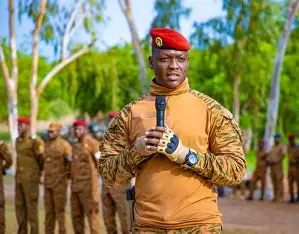
On 26 June 2026, Burkina Faso formally severed all diplomatic ties with France, a decision that underscores a growing trend in West Africa. Ouagadougou’s leadership framed the move as a necessary step to reclaim national sovereignty, citing accusations of neocolonial interference and alleged support for destabilizing networks operating within its borders. While the announcement marks a decisive break in bilateral relations, it also forces a critical question to the forefront: what does true sovereignty really mean in practice?
Breaking from the past: a bold but complex choice
Ending a long-standing partnership with a former colonial power is a bold political statement. It reflects a sovereign nation’s right to redefine its external alliances in pursuit of its own interests. Yet, the deeper challenge lies not in the act of rupture itself, but in what follows—does this shift pave the way for genuine autonomy, or does it merely substitute one form of dependence for another?
Since 2023, Burkina Faso has progressively deepened its engagements with non-Western partners, including Russia, China, Turkey, and Iran. On the military front, cooperation with Moscow has intensified, while economic outreach has focused on securing new investment and trade opportunities. These moves are often framed as part of a strategic shift toward a multipolar world order, one where influence is no longer monopolized by a single bloc.
Yet, multipolarity does not automatically equate to independence. Real sovereignty demands more than merely replacing one international partner with another. It requires that strategic decisions—whether military, economic, or political—are made solely in the national interest, free from external coercion or ideological alignment.
Is the Alliance of Sahel States on the same path?
Observers are now closely watching Burkina Faso’s neighbors, particularly Mali and Niger, both members of the Alliance of Sahel States (AES). Over recent years, the three nations have shown increasingly aligned political, diplomatic, and military postures, especially in their growing ties with Russia. If Mali and Niger were to follow Burkina Faso’s lead, it could signal a coordinated regional shift—but it would also raise an important question: are these decisions truly independent choices for each country, or do they reflect a shared geopolitical alignment under a new strategic partner?
Some analysts warn that if all three nations adopt similar measures in quick succession, it may appear as though they are following a prearranged script. This perception fuels an ongoing debate: is sovereignty about breaking free from one influence only to become ensnared by another? Or does it mean transcending dependency altogether?
History offers little comfort on this point. Major powers, regardless of their origin, consistently prioritize their own geopolitical, economic, and strategic interests. Burkina Faso’s challenge now is to prove that its break with France is not just a tactical repositioning, but the foundation of a sustainable path toward self-determination.
Beyond diplomacy: the test of real sovereignty
The true measure of sovereignty lies not in the number of embassies closed or public declarations made, but in a nation’s ability to finance its own development, secure its territory, process its natural resources domestically, and govern with autonomy. It lies in the capacity to forge diverse partnerships without falling under the dominance of any single foreign power—and to ensure that the welfare of the people remains the guiding principle of all policy.
Ultimately, the question remains: when a country replaces one powerful ally with another, is it truly breaking free from dependency… or merely exchanging one form of control for another? The lesson from history is clear: a genuinely sovereign nation does not replace one tutelage with another; it builds the capacity to decide its own future, no matter who its partners may be.