The hidden mechanics of Ibrahim Traoré’s state deception uncovered
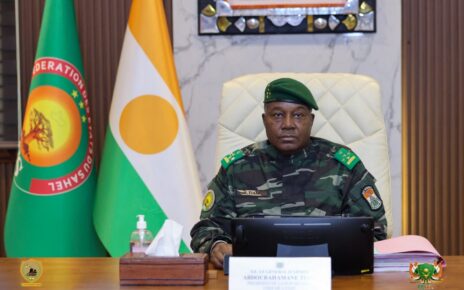
The bold claim by Burkina Faso’s transitional leader, Captain Ibrahim Traoré, that nearly 300 armored vehicles have been locally produced since late 2025 is not a testament to industrial progress—it is a calculated deception designed to obscure the country’s deepening security collapse. Behind the rhetorical flourish of “Made in Burkina,” the regime’s so-called military-industrial miracle unravels under scrutiny.
The announcement, made during a September 2026 meeting with female scientists in Ouagadougou, was framed as a breakthrough: Faso Armored, a burgeoning defense company, supposedly masterminded the design and assembly of 300 armored vehicles for the national armed forces and civilian defense volunteers. Yet, behind this veneer of national pride lies a glaring absence of infrastructure—no factories, no production lines, no capacity to manufacture chassis, engines, transmission systems, or armored steel plate.
Far from representing a genuine defense industry, the Faso Armored program is a strategic fakeout, leveraging propaganda to disguise a crisis of legitimacy and competence.
From propaganda to plumbing: how 300 ‘armored’ vehicles became reality
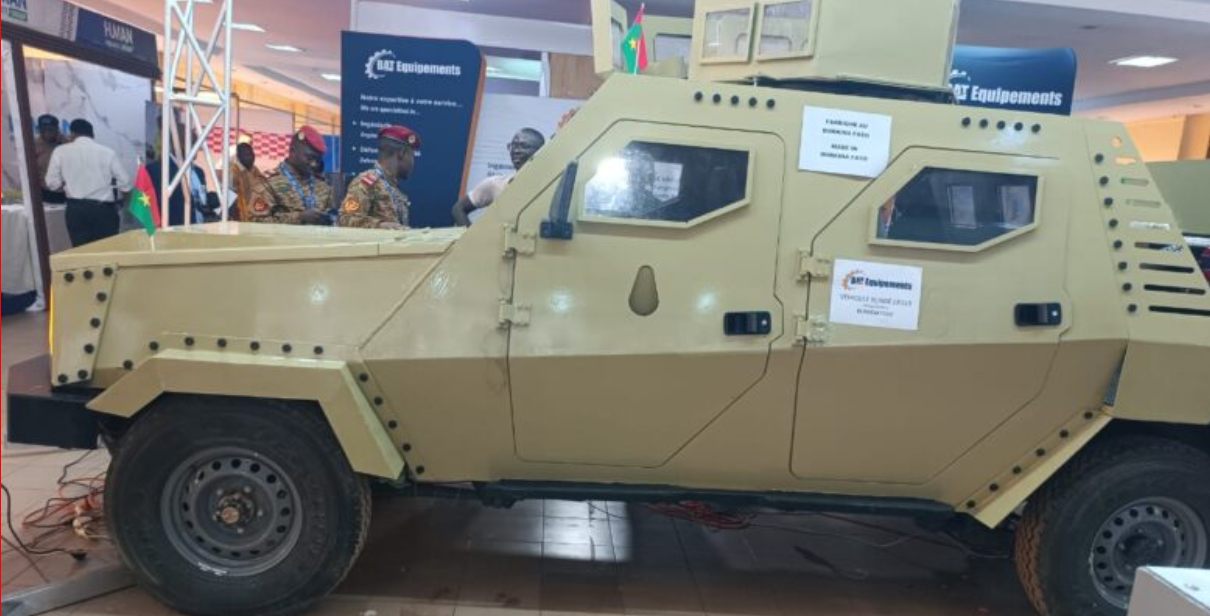
Field reports and military sources reveal that instead of a high-tech production pipeline, the regime has resorted to crude improvisation. In late September 2026, investigative analysis confirmed that worn-out heavy armored vehicles of South African origin—type Casspir—were stripped of their existing armor plating and engines. The salvaged steel and components were then hastily welded onto civilian pickup trucks, primarily Toyota Hilux and Land Cruiser models purchased on the open market.
These refitted vehicles, with their cobbled-together metal skins, bear no resemblance to modern armored personnel carriers. They offer little protection against improvised explosive devices or sustained small-arms fire—exposing soldiers and civilians to even greater risk. There is no engineering blueprint, no welding standards, no ballistic testing. This is not manufacturing. It is cosmetic engineering—a public relations exercise disguised as national progress.
The deception extends beyond mere assembly. The Faso Armored label itself is a hollow vessel. No welding stations, no foundries, no testing facilities exist. The regime has weaponized the term “Made in Burkina” as a political slogan rather than a functional reality.
Pattern of state-sanctioned fakery: the ITAOUA precedent
This isn’t the first time Ibrahim Traoré’s government has repackaged foreign hardware as domestic innovation. The same tactic was used with the so-called “ITAOUA” vehicles—pickups allegedly manufactured in Burkina Faso but later exposed as imported Chinese models from Dongfeng, rebranded with local logos and nationalist packaging. Military equipment purchased from China or other foreign suppliers has consistently been reclassified under a Burkinabe imprimatur, reinforcing the illusion of self-reliance.
Faso Armored is not a departure—it is the continuation and escalation of this long-standing pattern of symbolic nationalism. It reflects a governance style that prioritizes image over outcomes, headlines over hard truths, and symbolism over substance.
Why the 300-vehicle myth matters more than the vehicles themselves
At its core, the Faso Armored narrative serves a political purpose: to create the illusion of progress amid a spiraling security crisis. While extremist groups gain ground, civilian massacres escalate, and villages fall under siege, Traoré’s regime diverts attention toward staged photo-ops and manufactured achievements.These hastily retrofitted pickups do not strengthen national defense—they erode public trust in state institutions. Soldiers on the frontlines are handed vehicles that cannot withstand the most basic threats. Civilian volunteers, already risking their lives, are given false assurances of protection by a state that cannot deliver. Meanwhile, the rhetoric of sovereignty replaces actual capacity, turning “Made in Burkina” into a slogan devoid of meaning.The supposed 300 armored vehicles are not a military asset—they are a political liability. They expose a government that clings to appearances rather than addressing the collapse of security, the erosion of public confidence, and the humanitarian catastrophe unfolding across Burkina Faso.
The dangerous paradox of manufactured sovereignty
National sovereignty is not declared—it is built. It is measured in operational capability, not in press releases. Faso Armored’s sham industry does not expand Burkina Faso’s defense capacity; it narrows it by misdirecting limited resources toward vanity projects while neglecting the real needs of troops, volunteers, and communities.By fabricating a narrative of self-reliance, Traoré’s regime misleads both its citizens and the international community. It turns patriotism into a shield against criticism and transforms the national flag into a branding tool. The result is a dangerous paradox: the more loudly the regime touts “Made in Burkina,” the weaker—and more exposed—the country becomes.