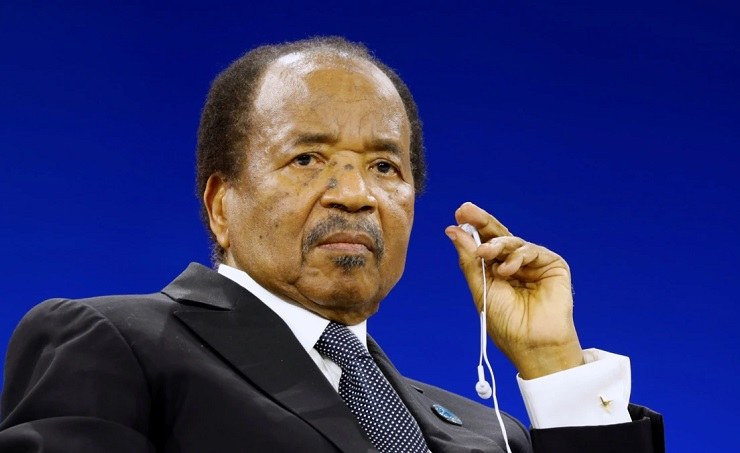
After 56 days of absence and unrelenting speculation, Cameroon’s government has finally broken its silence: President Paul Biya is alive, and his return is imminent. Yet the questions persist.
End of the blackout: government confirms Paul Biya is alive
Fifty-six days of collective breath-holding came to an abrupt end on Sunday, August 2, 2026. During a national broadcast, Communications Minister and government spokesperson René Emmanuel Sadi delivered a clear message: “The President is alive. There is no power vacuum.”
His words acted as a release valve, easing immediate tensions but doing little to dispel deeper uncertainties about the whereabouts and condition of the 93-year-old leader.
From brief stay to extended absence: the journey of 43 years in power
To grasp the gravity of the situation, one must consider the man at its center. Paul Biya, often called the Lion of Africa, has led Cameroon since 1982—43 years of uninterrupted leadership. At 93, he remains the world’s oldest serving head of state.
His departure on June 7, 2026, was initially described as a short private trip to Europe with his wife. Yet, as days stretched into weeks, the narrative shifted from routine travel to prolonged absence, leaving the nation in limbo.
A presidency reduced to paperwork
Officially, state functions continued. Decrees were signed. Official telegrams were dispatched. The civil cabinet’s social media accounts posted congratulations to France on its national holiday. But no images of the president. No public statements. No visible presence. Only silence—fuel for rumor.
Local media like Le Messager captured the public mood: “Fifty days away is too long! Departing Cameroon on June 7 for what was supposed to be a private European stay, Paul Biya has already spent over seven weeks abroad, leaving a nation paralyzed, a government weakened, and citizens gripped by anxiety about the future.”
Party rhetoric vs. constitutional reality
In response to mounting speculation, the ruling RDPC party attempted to quell concerns. Christophe Mien Zok, head of propaganda, declared in a July 15 editorial, “The Lion has not left. Power is not vacant.” Yet such assurances failed to satisfy critics.
Opposition figures, including deputy Jean-Michel Nintcheu, escalated demands. They formally petitioned the Constitutional Council to declare a power vacuum, citing the absence of a vice-president—a position left vacant since the April 2026 constitutional revision.
The government responds: “He is alive and will return soon”
In a carefully staged interview on national radio, Minister Sadi addressed the nation directly. He dismissed claims of vacancy outright: “Those calling for a declaration of vacancy should review the constitution more rigorously and objectively.”
He reaffirmed the legal foundation: “The Constitutional Council has not ruled on any vacancy. President Paul Biya is alive. He has not resigned.”
As for timing, precision was elusive. “I cannot tell you exactly when he will return. Even if I knew, it is not for me to announce it,” Sadi stated. Yet he offered a pledge: “I can assure you he will be back very soon.”
An absence unlike any other
This prolonged stay surpasses all previous records. In autumn 2024, Biya was abroad for 42 days. Over 43 years, he has spent nearly 2,600 days—almost seven years—outside Cameroon, setting a record among African heads of state for extended private travel.
Reports, though unconfirmed, suggest members of his inner circle, including relatives, may currently be in Switzerland. The absence of official confirmation only deepens the mystery.
Does the constitution have an answer?
The legal debate centers on vacancy. Opposition lawmakers have urged the Constitutional Council to intervene, arguing that absences exceeding 45 days should trigger constitutional review.
However, the law is not so clear. Cameroon’s constitution places no limit on how long a president may remain abroad. “No legal text governs the duration of a president’s absence from national territory,” the UDC opposition noted.
The government has leveraged this legal gray area. Critics call it a dangerous institutional void.
A nation suspended in uncertainty
Cameroon holds its breath. Social media erupts with reactions—relief mixed with skepticism. “Paul Biya is the luckiest president in the world. He can come and go as he pleases, with no consequences,” one user commented.
Others voice concern: “Fifty days away—the longest absence yet. It fuels speculation about his health.”
Official reassurance that he will return soon may not be enough. The lack of a specific date, the opacity surrounding the trip’s purpose, and the absence of visible proof have fueled demands for greater transparency.
The unspoken question: what comes after Biya?
Beyond immediate concerns lies a larger issue: the future of governance. At 93, Paul Biya embodies the regime itself. But for how much longer?
The opposition UDC has called for an “institutional framework to regulate prolonged absences of the head of state.” Behind the demand for transparency lies an unavoidable truth: the country must prepare for a post-Biya era.
What remains unknown
Despite the government’s statement, key questions linger:
- Where exactly is Paul Biya? Reports suggest Switzerland, but no official confirmation.
- What is the true nature of his trip? Marketed as private, the duration and circumstances raise eyebrows.
- When will he return? “Very soon,” says the minister—a promise, not a date.
- What is his state of health? “He is alive,” the minister confirms. Nothing more.
Can words replace presence?
The government’s delayed response came with risks. Coming too late, it allowed rumors to flourish. Coming without specifics, it risks failing to convince.
Yet René Emmanuel Sadi stood firm. He refuted criticism, reasserted constitutional principles, and gave hope of a swift return.
In a system where power is deeply personalized and information tightly controlled, however, the words of a minister carry less weight than the stillness of a president.
Waiting for the Lion to roar again
The nation waits. Citizens wait. They wait for their president. They wait for answers. Most of all, they wait to see if the Lion of Africa will truly rise again.
But as the uncertainty drags on, one question grows louder: Can a country’s stability truly depend on silence and assumption?