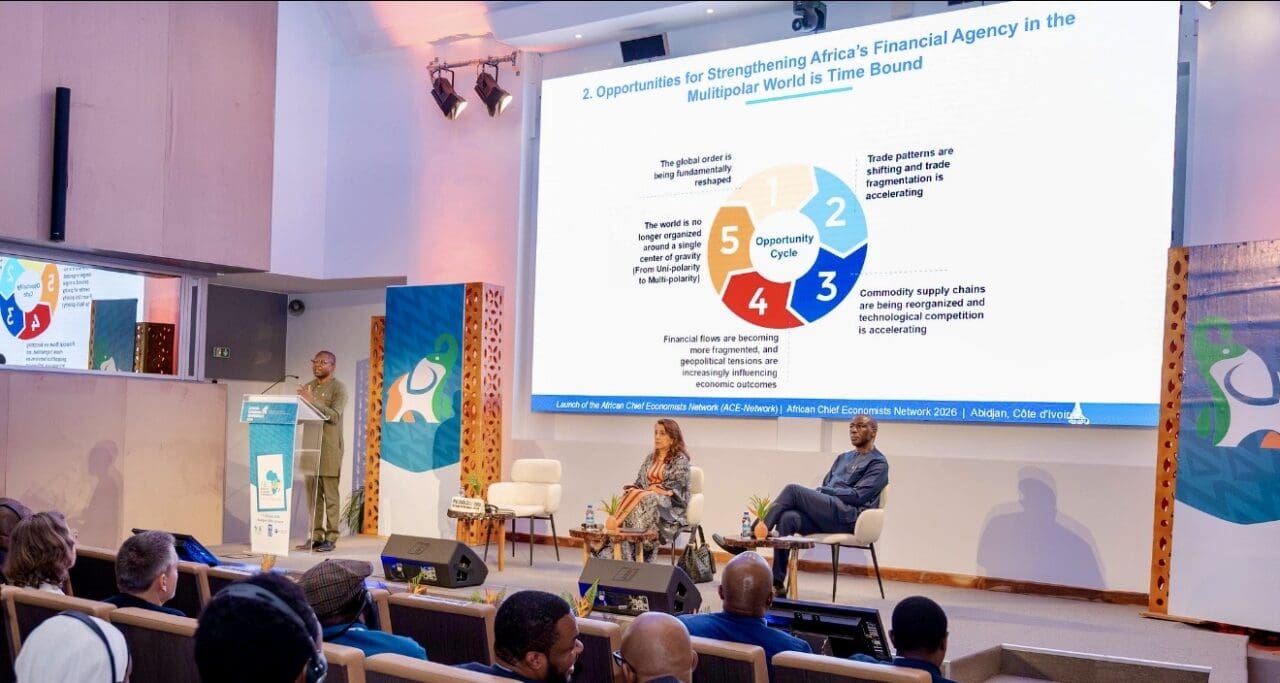
A three-day gathering in Abidjan has reframed Africa’s economic future, shifting from crisis response to proactive strategy. The 2026 African Economic Conference (AEC) concluded with a bold vision: positioning Africa not as a passive observer of global shifts, but as a decisive architect of its own destiny through deeper integration, innovative financing, and unified action.
Over the course of the event, policymakers, economists, and international partners converged on a single imperative: Africa must move beyond adaptation to dictate its trajectory in a world where traditional power structures are rapidly evolving. Co-hosted by the African Development Bank (BAD), the United Nations Development Programme (PNUD), and the Organisation for Economic Co-operation and Development (OCDE), the conference underscored a shared ambition—to transform Africa into a central player in the global economy, not a marginalized participant in its disruptions.
Turning global turbulence into strategic advantage
Raymond Gilpin, Chief Economist at the PNUD’s Africa Regional Bureau, framed economic volatility as an opportunity rather than a threat. While acknowledging that “global economic storms will continue to test African institutions,” he emphasized that such challenges cannot “erode the fundamental wealth and resilience of Africa’s people.”
The economist’s remarks crystallized the conference’s core message: urgent reform, stronger partnerships, and collective action are essential to building the resilient, prosperous Africa the continent—and the world—desperately needs. The shift is clear: the goal is no longer merely survival, but converting geopolitical upheavals into long-term strategic gains.
Breaking silos to navigate a complex world
Ida McDonnell, Senior Advisor at the OCDE, highlighted the need to rethink development paradigms. She argued that trade, debt, investment, climate policy, fiscal measures, and development financing can no longer be treated as isolated domains. “The interconnected nature of today’s challenges demands integrated analysis,” she stated, urging greater data and knowledge sharing among institutions to inform smarter public policies.
This perspective reflects a broader reality: crises—whether energy shortages, financial instability, climate disasters, or geopolitical tensions—now trigger cascading effects across African economies. The conference made it clear that outdated analytical frameworks can no longer guide effective policymaking.
From dialogue to decisive action
Marie-Laure Akin Olugbade, Vice President of the African Development Bank Group, stressed the urgency of translating Abidjan’s discussions into tangible outcomes. “The recommendations emerging from this conference must now inform public policies and development partnerships,” she asserted. She framed the recommendations as a foundation for strengthening Africa’s geopolitical influence and commercial resilience—critical priorities in an era of tight budgets and escalating global competition.
The challenge ahead is implementation: turning ambition into policy, investment, and measurable progress. The stakes are high, but so is the opportunity.
The path to economic sovereignty
Ahunna Eziakonwa, UN Assistant Secretary-General and Director of the PNUD’s Africa Regional Bureau, described the conference as just the beginning. The real work lies in dismantling barriers to intra-African trade, accelerating innovation, deepening regional value chains, and equipping a rapidly growing youth population to thrive in a transformed global economy.
Her closing remarks distilled the conference’s spirit: “In a multipolar world, Africa’s leverage will not come from choosing sides, but from building its own economic power.” True sovereignty, she argued, is not won through alignment or isolation, but through self-driven value creation, sustainable financing, and the defense of continental interests.
Abidjan as a hub for Africa’s renewed ambition
The 2026 AEC also served as the annual gathering of the Global Network of Chief Economists from development and financing institutions, alongside the launch of the African Chief Economists Network (ACE Network). These initiatives point to a broader shift in development discourse—one that moves beyond appeals for external support to a focus on Africa’s capacity to shape global economic rules.
With international power balances in flux, organizers see a historic window of opportunity. But opportunity alone is not enough. The true test will be whether Africa can convert this collective ambition into concrete policies, investments, and results—ensuring that the promises made in Abidjan transcend rhetoric and lay the groundwork for a more sovereign, resilient, and influential continent.