
The latest chapter in the escalating tensions between Burkina Faso and France unfolded in a high-stakes diplomatic showdown this week. At the center of the confrontation stood two key figures: Burkina Faso’s Foreign Minister Karamoko Jean-Marie Traoré and his French counterpart Jean-Noël Barrot, whose sharp exchanges laid bare the deepening rift between the two nations.
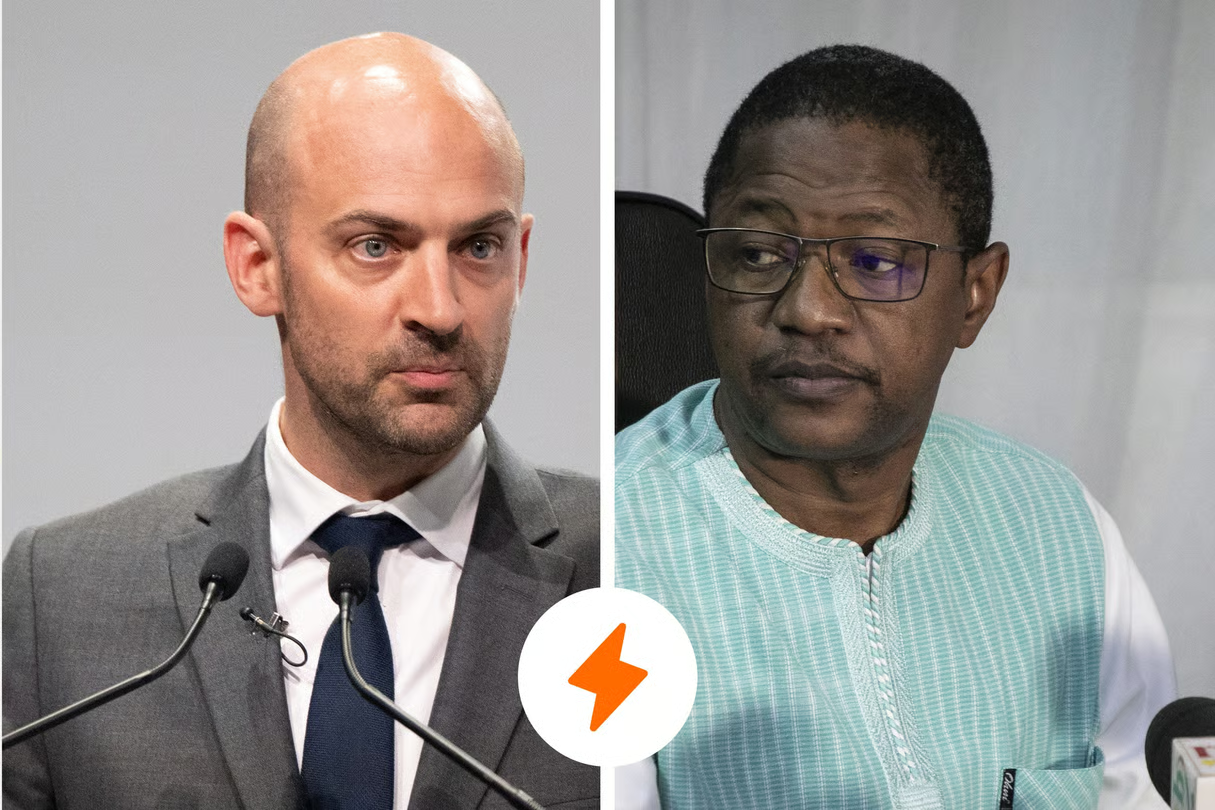
a clash rooted in shifting geopolitical sands
The confrontation between Ouagadougou and Paris is no sudden flare-up but the result of months of growing dissatisfaction. Burkina Faso’s military-led government, under the leadership of Captain Ibrahim Traoré, has steadily distanced itself from its former colonial power, embracing instead a bold new alignment with regional partners and international actors willing to challenge the status quo.
At the heart of this realignment lies the Alliance of Sahel States, a bloc formed last year by Burkina Faso, Mali, and Niger. This coalition has emerged as a powerful symbol of the region’s determination to chart its own course, free from external interference. The alliance’s formation sent shockwaves through Western capitals, particularly in Paris, where policymakers have watched with unease as their influence in the Sahel dwindles.
France’s fading influence in the Sahel
France’s once-dominant role in the Sahel—built on decades of military, economic, and political engagement—has come under intense scrutiny in recent years. Public opinion in Burkina Faso and neighboring countries has turned increasingly hostile toward French presence, fueled by perceptions of neocolonial interference and frustration over unmet development promises. The military juntas now in power in Ouagadougou and Bamako have made no secret of their desire to reduce French influence, a stance that has only hardened since the juntas’ rise to prominence.
The latest diplomatic skirmishes between Traoré and Barrot underscore the irreversible nature of this shift. Their heated exchanges reflect deeper disagreements over sovereignty, resource management, and the future of security partnerships in the region. For Burkina Faso, the priority is clear: reclaiming control over its foreign policy and asserting its autonomy in a post-colonial landscape.
what’s next for Burkina Faso-France relations?
The path forward remains uncertain, but one thing is clear: the days of unchallenged French dominance in the Sahel are over. Burkina Faso’s pivot toward the Alliance of Sahel States and its vocal criticism of French policies signal a new era of regional assertiveness. Whether this leads to a complete rupture or a tense détente will depend on the willingness of both sides to engage in meaningful dialogue—and the ability of France to adapt to a rapidly changing geopolitical reality.
For now, the standoff between Traoré and Barrot serves as a stark reminder that the old power dynamics in the Sahel are no longer tenable. The question is no longer whether change is coming, but how both nations will navigate the fallout.