The moment an ordinary Flydubai flight from Dubai to Tel Aviv spiraled into a full-blown international security crisis — it all came down to a few minutes of sheer chaos in the cockpit. But what really happened behind that reinforced door when the tension reached a breaking point?
The sequence of events that defied logic: a timeline of rapid altitude loss and emergency codes
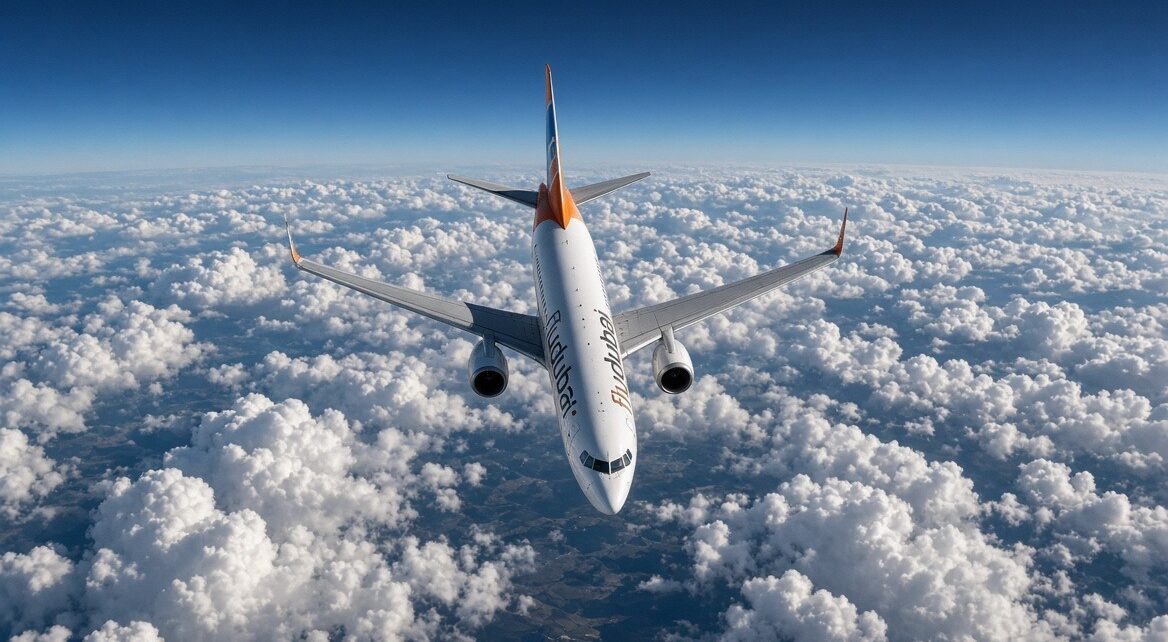
A Boeing 737 MAX 8, carrying over 150 passengers, had departed Dubai with a routine flight plan. Then, in mid-air, everything changed. Flight tracking data reveals a shocking descent that saw the aircraft lose several thousand meters in a matter of seconds. Such a rapid drop is not the result of standard operating procedure — it signals a critical loss of control.
The plane soon broadcast two emergency signals: first, code 7700, indicating a general emergency, followed by code 7500 — the transponder code reserved for unauthorized cockpit intervention, typically associated with hijacking threats. To air traffic control and military radar systems, that sequence wasn’t just a warning; it was a red alert. By the time the aircraft declared code 7500, Israel had already scrambled fighter jets in response. On the ground, anticipation of a worst-case scenario loomed large.
From passenger panic to cockpit rumors: decoding conflicting accounts
On board, conditions rapidly deteriorated. Several passengers later described hearing screams, witnessing what appeared to be blood, and fearing imminent disaster. Some accounts spoke of a violent confrontation between the two pilots, one of whom was reportedly injured with a blade. Others suggested passengers intervened directly in the cockpit, attempting to restore order.
Upon landing at Tabuk, Saudi Arabia, both pilots were hospitalized, while all passengers were safely evacuated. But what unfolded in those final minutes remains shrouded in uncertainty. Theories proliferated almost instantly: terrorist attack, suicide attempt, power struggle, even deliberate sabotage. Yet none have been confirmed — and that ambiguity lies at the heart of the investigation.
Why early speculation about terrorism may be misleading
Citing the gravity of past aviation tragedies, some narratives drew parallels to 9/11, framing the incident as a potential terrorist plot. However, such analogies rely on assumptions not supported by available evidence. The 9/11 attacks involved coordinated hijackings and intentional use of aircraft as weapons — a level of orchestration absent from the scant public data on this flight. While passengers reported fear and disorder, no credible information indicates a premeditated plan to convert the plane into an instrument of mass destruction.
Such distinctions are crucial. The terror felt by those on board was real. The interpretation of that terror as intentional terrorism remains speculative — and premature.
The unanswered question: who truly controlled the aircraft?
What makes this incident uniquely unsettling isn’t just the emergency codes or the rapid descent — it’s the identity of who was in command during those critical moments. Who triggered code 7500? Who initiated the emergency descent? At what point did passengers enter the cockpit, and why?
The answers may not lie in dramatic headlines, but in the cold, hard data: flight data recorders, cockpit voice recordings, and air traffic control transcripts. These technological witnesses hold the key to reconstructing the chain of events: Was this the result of an intentional act? A fight that escalated beyond control? Or a sudden medical emergency misdiagnosed in crisis?
The investigation now faces a paradox. The most volatile moments occurred in silence — behind a locked door, removed from external observation. Until the recorders are analyzed, the cockpit remains the most haunting gray area of this unfolding story.
An incident that became a regional diplomatic flashpoint
The geopolitical ripple effects of the event were as immediate as they were profound. The flight was bound for Tel Aviv, carrying Israeli passengers, making its diversion to Tabuk — Saudi Arabia — not just a logistical necessity, but a diplomatic challenge. Saudi Arabia and Israel maintain no official diplomatic relations, yet this aircraft, in distress, became a temporary bridge between two nations otherwise separated by decades of geopolitical tension.
As the plane was intercepted in Saudi airspace, Israel responded with fighter jets, not out of aggression, but precaution. Authorities coordinated emergency support, consular teams, and multi-agency debriefings. The matter swiftly transitioned from a flight emergency to a transnational security event, underscoring how quickly aviation can become a nexus of global tension.
What we know — and what remains a mystery
Established facts: The aircraft experienced a severe incident; both pilots sustained injuries; the plane descended rapidly; emergency codes were triggered; and all passengers landed safely in Tabuk. Flydubai acknowledged an incident occurred but declined to disclose further details publicly.
Still unknown: The motive behind the confrontation, the intent of the pilots, whether there was a deliberate attempt to use the aircraft as a weapon, or whether this was the unintended consequence of a tragic misunderstanding or medical crisis. Those questions now fall to investigators, forensic experts, and the silent testimony of the black boxes.
The real question facing aviation authorities and the public is not whether this was a repeat of 9/11 — but rather, how a modern commercial aircraft could enter a state where, for several minutes, nobody outside the cockpit knew who was truly in control.
The lesson for air safety and transparency
This incident exposes a glaring vulnerability in modern air travel: the cockpit door, designed for security, can also become an echo chamber for chaos. When things go wrong inside, the rest of the world is left to interpret fragments — sirens heard over intercoms, emergency signals, rumors from passengers. Without real-time transparency or recorded proof, misinformation can spread faster than the truth.
As the investigation continues, one truth emerges with clarity: in the age of advanced aviation, a few seconds of uncontrolled chaos in the cockpit can ripple outward — shaping policy, escalating military responses, and reshaping public trust — long after the crisis itself has passed.