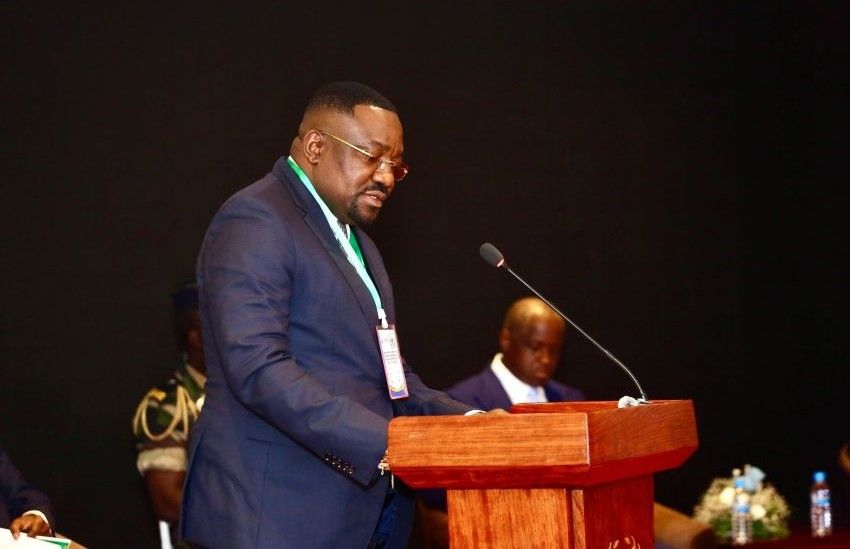
Libreville, July 10, 2026 (Infos Gabon) – In international organizations, certain distinctions often go unnoticed by the general public despite being true markers of institutional credibility. The designation of Gabon by the United Nations to participate in evaluating anti-corruption mechanisms in Seychelles falls into this category of discreet yet highly strategic events.
Through this mission, Libreville does not simply integrate a technical cooperation exercise between countries. The country now gains access to the exclusive circle of states called upon to appreciate the conformity of other nations’ public policies with international standards for governance and transparency.
This responsibility granted by the United Nations is a strong diplomatic signal in a context where issues related to anti-corruption, public accountability, and institutional integrity are increasingly prominent in international relations and economic evaluation criteria for emerging economies.
A recognition of national competencies
The Gabonese delegation intervenes after the second cycle of evaluation dedicated to implementing the United Nations Convention against Corruption, the primary international legal instrument in this field.
This process, conducted under the authority of the United Nations Office on Drugs and Crime, aims to measure progress made by signatory states in preventing corruption, promoting international judicial cooperation, recovering illicit assets, and strengthening public transparency institutions.
Following the validation of its own evaluation cycle, Gabon was selected through a random draw to chair the examination of the Seychelles’ devices. This mission consists of analyzing the legislative frameworks, control mechanisms, and policies developed by the archipelago in the Indian Ocean to determine their conformity with UN Convention standards.
Far from being a mere administrative formality, this type of evaluation requires recognized international expertise in law, technique, and institutions.
The Seychelles under the scrutiny of Gabonese experts
To conduct this mission, the National Anti-Corruption and Illicit Enrichment Commission mobilized its most experienced experts. The work of evaluators consists mainly in examining national prevention devices, declaration of assets mechanisms, public finance control procedures, and international judicial cooperation tools.
The objective is not to penalize evaluated states but to promote the sharing of best practices, identify areas for improvement, and strengthen collective efficiency in combating corruption. This evaluation mechanism is based on a principle of mutual cooperation between member states, which constitutes one of the pillars of the United Nations system of international governance.
In a world where corruption is estimated at several thousands of billions of dollars each year, the effectiveness of these devices becomes a major issue for economic stability, investor confidence, and public institution quality.
A return to diplomatic influence
Beyond its technical dimension, this designation also represents an evolution in Gabon’s international position. Participation in shaping, evaluating, and disseminating international standards is today one of the main indicators of a state’s diplomatic influence within international organizations.
By becoming evaluators rather than evaluated states, Gabon takes a symbolic step in its positioning on the global stage. This evolution occurs within a context where Libreville seeks to strengthen its presence in regional and multilateral institutions, whether it concerns environmental issues, governance, security, or economic cooperation.
The mission entrusted to the Gabonese experts goes beyond the scope of Seychelles alone. It testifies to an international recognition of the country’s technical capabilities and confidence in its ability to contribute to defining contemporary standards for good governance.
In the current multilateral system, influence is no longer solely measured by economic power or military might. It is also constructed in negotiation rooms, evaluation mechanisms, and spaces where global rules are defined.
By joining the ranks of countries evaluating anti-corruption standards, Gabon does not participate only in international debates. It contributes to shaping the norms that will guide public policies tomorrow.