The hidden forces behind Kribi’s port-driven transformation
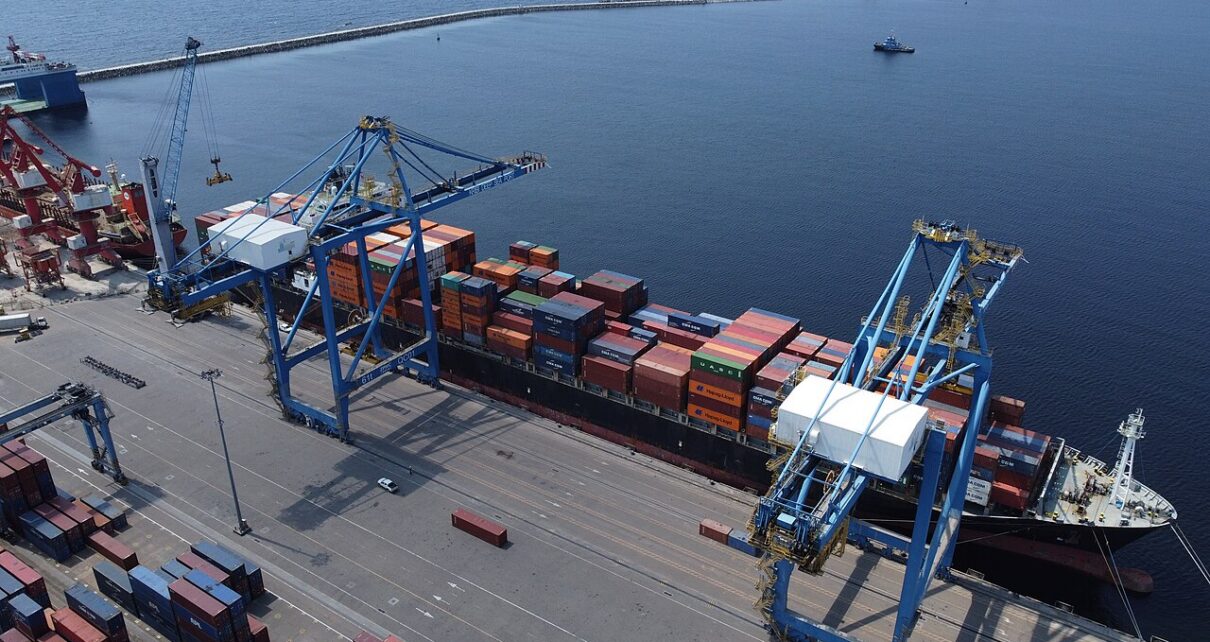
Fifteen years ago, the stretch of coastline where Kribi’s deep-water port now stands was little more than a quiet fishing hamlet, accessible only by narrow dirt paths winding through dense vegetation. Today, that same stretch of land supports one of central Africa’s most advanced maritime hubs—a testament to how large-scale infrastructure can quietly reshape entire regions from the ground up.
From fishing huts to industrial corridors: the making of a port city
The idea of a deep-water port in Kribi dates back to the 1970s, conceived as a strategic complement to the outdated Douala port system, whose shallow estuary limited access for large vessels. Yet it wasn’t until the arrival of China Harbour Engineering Company (CHEC) in 2011 that ground finally broke on what would become Cameroon’s first modern deep-water port.
Gu Gaobai, now CHEC’s country project director, recalls arriving at a site with nothing but a sandy shoreline and reefs marking the future shoreline. “We had to cut through dense jungle to even reach the construction zone,” he says. From those early days of rudimentary tracks, a full-fledged infrastructure has emerged.
The transformation is most visible along the access roads leading to the port. Once barely passable tracks, they now sustain heavy freight traffic with dedicated lanes, pedestrian crossings, and round-the-clock lighting—previously unheard-of in the area. Local resident Jean-Kalvin Assembe, now 50, reflects on the shift: “Life here has changed completely. Even small shop owners see steady customers now. We didn’t have power like this before.”
The ripple effect on local commerce and mobility
Truck drivers like Yaya Aboubakar, a 68-year-old veteran of regional haulage, have felt the change most directly. “Before, trips to Kribi meant unpredictable delays and poor roads. Now, the service is fast and reliable,” he says. Long convoys of trucks snake through the port daily, transporting goods from fertilizers to heavy machinery—now unloaded just hours from sea to road.
New housing, hospitals, shopping centers, and even universities have sprung up around the port, earning Kribi comparisons to Shenzhen—the Chinese tech and industrial hub that became a byword for modernization. “Kribi is Cameroon’s Shenzhen,” Gu remarks. “A city built not just for today, but for the future.”
Kribi port’s hidden role in Cameroon’s industrial rise
Behind the port’s visible growth lies a parallel expansion: its industrial zone. What began as a modest 455-hectare logistics area has evolved into a sprawling 4,000-hectare zone designed to anchor Cameroon’s industrial future.
Patrick Mpila Ayissi, infrastructure lead for the Kribi Port Industrial Zone, reports that over 700 million USD in investments have flowed into the zone since 2018, with 18 companies now operational and 93 land use permits issued. The goal: to attract 900 million USD more and create over 150,000 direct and indirect jobs over the next decade and a half.
Port throughput has surged—container traffic quadrupled since 2018, exceeding 555,000 TEUs in 2025, while total cargo volume surpassed 12.7 million tons in 2024. Beyond Cameroon’s borders, Kribi now serves as a gateway for trade into Gabon, Central African Republic, Chad, Congo, and Equatorial Guinea.
“MSC now calls directly at Kribi,” Ayissi notes. “We used to depend on transshipment via Douala. Now, goods head straight to regional capitals—saving time, cost, and turning Kribi into a true trade crossroads.”
A logistics spine for central Africa
To support this regional integration, CHEC built the Kribi-Lolabé highway, linking the port to major Cameroonian cities. “This road didn’t just connect Kribi to the rest of the country,” says Emmanuel Nganou Djoumessi, Minister of Public Works. “It turned a coastal project into a national development engine.”
The port’s expansion has transformed it from a standalone facility into a logistics backbone servicing landlocked nations like Chad and CAR, reducing their dependence on ports further west.
The unsung legacy: skills, jobs, and lives changed
Perhaps the most enduring impact isn’t visible in steel or concrete, but in the people who built and now operate the port.
Ngatugirius Ndenya, a 53-year-old welder, came to Kribi from Yaoundé in 2013 with little more than basic training. CHEC’s training program paired him with Chinese experts. “I started as a welder. Now I can handle every stage of steel fabrication,” he says. “I’ve trained others too. This port didn’t just build structures—it built skills.”
For others, the port delivered full economic liberation. Armand Guehoada arrived with no savings and a salary of under 200 USD a month. “I bought my first car after two years. Now I have three,” he says. “I support my family, send my kids to better schools. The port changed everything.”
Gu Gaobai estimates that thousands of Cameroonians have been trained in port construction, logistics, and industrial operations—many now leading projects in the growing industrial zone. “This port wasn’t just built with Chinese hands,” he says. “It was built with Cameroonian futures in mind.”
Kribi’s port: a 15-year partnership with global significance
This year marks both the 55th anniversary of Cameroon-China diplomatic ties and the 15th anniversary of construction at Kribi port—milestones that underscore the depth of their collaboration.
Ayissi emphasizes that Kribi was never just a commercial venture. “Its funding came through concessionary loans from Chinese institutions,” he says. “That long-term commitment ensured stability and scale from day one.”
Patrice Melom, Director General of the Kribi Port Authority, sees the port not as an endpoint, but a starting point. “Kribi has delivered tangible results. Now, it’s our duty to turn this asset into a driver of sustainable growth—for Cameroon and for central Africa.”