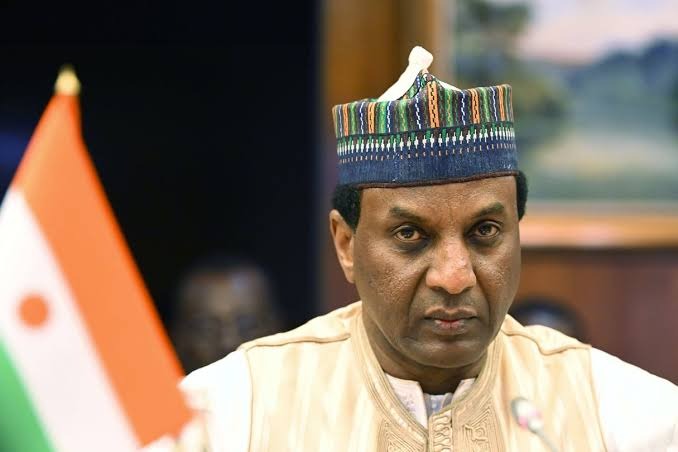
Ali Mahaman Lamine Zeine stood before the United Nations General Assembly, delivering yet another fiery speech about Niger’s economic sovereignty. With the backdrop of the Palais des Nations, the prime minister painted a picture of independence: reclaiming national resources, breaking free from foreign domination, and forging a self-sufficient economy. Yet behind the polished rhetoric of the National Council for the Safeguarding of the Homeland (CNSP), the numbers tell a starkly different story.
The reality is that Niger’s two flagship industrial enterprises, responsible for uranium and oil production, have plunged into chaos. Far from being engines of national prosperity, the Société des Mines de l’Aïr (SOMAÏR) and the Société Nigérienne des Produits Pétroliers (SONIDEP) now embody a critical failure of governance under military rule. What was meant to be a triumphant nationalist revival has instead become a textbook case of how hollow political slogans can mask systemic mismanagement.
From sovereignty to shutdown: what happened to SOMAÏR’s uranium dream
The takeover of SOMAÏR from its French partner Orano was heralded as a victory for national dignity. The promise was clear: more revenue, more jobs, and full control over the country’s uranium reserves—the jewel in Niger’s economic crown. But three years into the CNSP’s stewardship, the industry is near collapse.
Production has plummeted by nearly 80%, leaving Arlit’s mines operating at a fraction of their capacity. The reasons behind this disaster reveal deep structural failures:
- Supply chain paralysis: Essential reagents like sulfuric acid, previously imported seamlessly, now struggle to reach the mines due to border closures and bureaucratic hurdles.
- Export paralysis: Shipments of yellowcake—Niger’s only high-value mineral export—are stalled. Without reliable export licenses or international distributors, over 500 metric tons of unsold concentrate sit idle.
- Economic hemorrhage: Local contractors go unpaid, thousands of jobs vanish, and critical tax revenues that once funded schools and hospitals have evaporated into thin air.
Replacing a global operator with a committee of loyalists doesn’t change the physics of mining. But replacing technical expertise with political loyalty? That’s a recipe for decline. The CNSP’s strategy of waving the flag of independence has left the mines without fuel, without buyers, and without hope.
The 25 billion FCFA black hole: why Niger’s oil dream drifts into oblivion
While uranium staggers, the oil sector—Niger’s second pillar of sovereignty—faces an even deeper crisis. The Société Nigérienne des Produits Pétroliers (SONIDEP) was supposed to be the flagship of the CNSP’s new economic model, especially after the inauguration of the pipeline to Benin’s coast. It was meant to transform Niger into a major petroleum exporter, enriching the national coffers.
Instead, SONIDEP is drowning in debt. Internal audits and unpublished reports indicate losses exceeding 25 billion West African CFA francs. This staggering deficit exposes systemic failures:
- Contract opacity: No open tendering, no public oversight—just a web of direct negotiations riddled with rumors of price manipulation and inflated commissions.
- Logistical failures: Despite a pipeline touted as a strategic asset, delays in infrastructure completion and export bottlenecks mean crude oil sits in storage, unsold and unsellable.
- Revenue illusion: The promised dividends from oil never materialize. The state treasury receives little, while SONIDEP’s balance sheet hemorrhages cash—all in the name of “economic emancipation.”
How can a monopoly on oil distribution, in a country positioned to become a regional petrostate, generate such a financial disaster? Not through incompetence alone—but through a deliberate veil of secrecy draped over what should be a bedrock of national wealth.
The cost of sovereignty: what the people of Niger are really paying
The CNSP’s narrative is simple and seductive: blame outsiders, reject accountability, and rally behind the flag. But the human cost is real. Families in Arlit watch their livelihoods fade as mining jobs disappear. Children in rural areas see classrooms remain empty because the uranium plant no longer pays taxes. And in the capital, motorists endure long lines at gas stations—not because of global shortages, but because SONIDEP’s financial collapse has stopped fuel imports.
The irony is cruel: the leaders who speak of liberation from foreign exploitation have presided over the collapse of the very industries meant to finance that freedom. The uranium that once powered European reactors now piles up in warehouses. The oil in Niger’s soil, one of the last untapped large reserves in West Africa, remains buried in red tape and deficit.
Sovereignty is not measured by the volume of applause in New York, but by the stability of the grid, the solvency of the treasury, and the security of the paycheck. Until Niamey stops hiding behind patriotic speeches and starts fixing the factories it controls, the dream of economic independence will remain a mirage.
The questions Niamey must answer
The time for rhetorical flourish has passed. If the CNSP is serious about building a genuine economy—not just a nationalist facade—then it must confront these realities:
- Where is the promised transparency? Where are the independent audits of SONIDEP and SOMAÏR that were announced after the July 2023 coup?
- Who benefits from oil and uranium sales? Are contracts being awarded through transparent bidding, or through backroom deals?
- Why does the treasury receive so little? When revenues from state-owned enterprises vanish, where does the money go?
True sovereignty belongs to the people—it is not a propaganda tool for generals in uniform. It is built on functioning industries, paid workers, and accountable leaders. Until then, the only thing growing in Niger is the discrepancy between the speech in New York and the suffering in the streets.