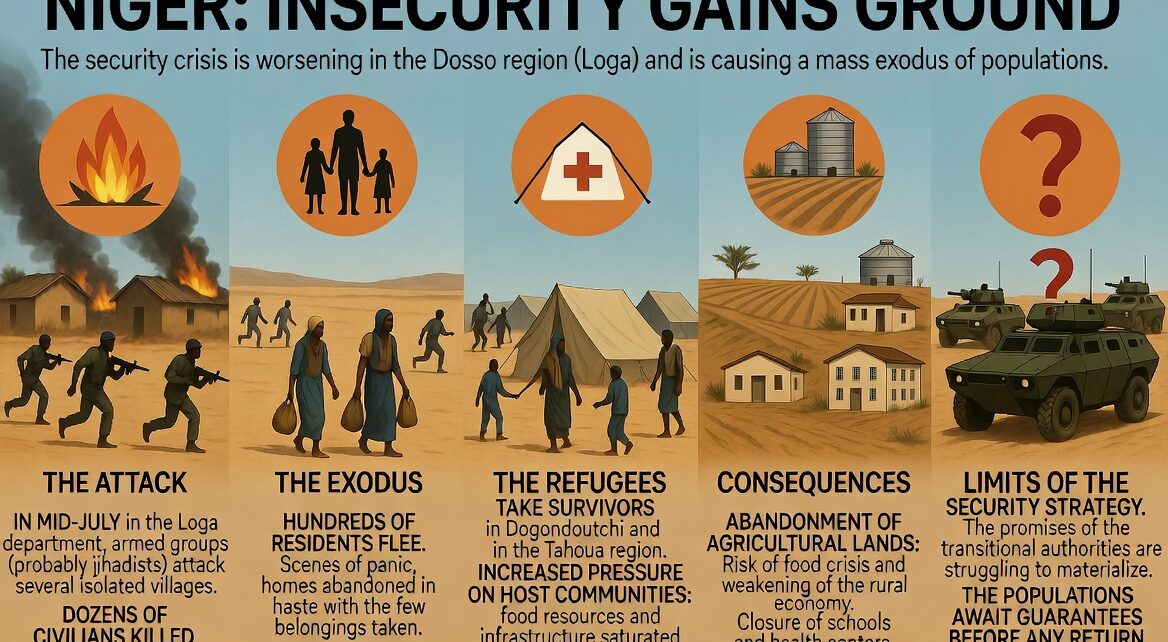
Niger is grappling with an escalating security crisis in the Loga department of the Dosso region. Following intense attacks in mid-July, hundreds of residents have fled their homes, seeking shelter in safer areas. The ongoing instability reveals a stark reality: despite reassurances from military authorities, many communities remain vulnerable to armed group incursions, with civilians bearing the brunt of the violence.
Evidence points to the involvement of militant factions in the brutal assaults, which struck defenseless settlements along the country’s western frontier. Survivors recount scenes of chaotic escape—entire villages abandoned in haste, families carrying only the most basic necessities, and terror gripping communities once known for their tranquility. The attackers exploited lapses in security, leaving little chance for resistance.
A flood of displaced individuals has since made their way to Dogondoutchi and other locales in the Tahoua region, hoping to find refuge. Their arrival, however, aggravates existing challenges, as host communities struggle with economic hardship, deteriorating infrastructure, and dwindling food supplies.
This latest wave of displacement intensifies Niger’s humanitarian emergency while challenging the military junta’s security agenda. Since seizing control, the government has vowed to restore stability, yet assaults continue in both borderlands and inland territories, raising serious concerns about the effectiveness of military operations and troop deployments.
The surge in internally displaced persons underscores the conflict’s mounting human cost. When families abandon their homes, fields, and means of survival, it reflects a profound erosion of trust in the state’s ability to safeguard its citizens. For these displaced groups, returning isn’t just a matter of ending hostilities it demands ironclad assurances of enduring protection.
Niger’s interim leadership has committed to boosting military presence in the affected zone to support resettlement efforts. Yet skepticism persists. Many locals insist they will only consider returning if security forces are permanently stationed in sufficient numbers to preempt future attacks. For them, empty promises carry little weight against a backdrop of persistent violence.
Economic and social fabric under pressure
The mass exodus carries consequences that extend beyond immediate suffering. Abandoned farmlands jeopardize upcoming harvests, deepening food insecurity and weakening rural economies already on the brink. Schools close, medical facilities face extreme pressure, and local markets falter, leaving residents more vulnerable than ever.
Humanitarian needs outpace available resources
The displacement crisis has pushed humanitarian conditions to alarming levels. Displaced families urgently require food, potable water, medical assistance, and secure housing. Aid groups warn that their ability to respond is increasingly strained as needs multiply across the region.
These developments expose a troubling trend: Niger’s security crisis is no longer confined to historically affected areas. The spread of attacks into new regions highlights the expanding influence of armed groups and gaps in the country’s defensive capabilities.
For the residents of Loga, the future remains uncertain. Without concrete security measures in place, mass displacement is likely to persist, compounding the nation’s human, economic, and social turmoil amid prolonged instability.