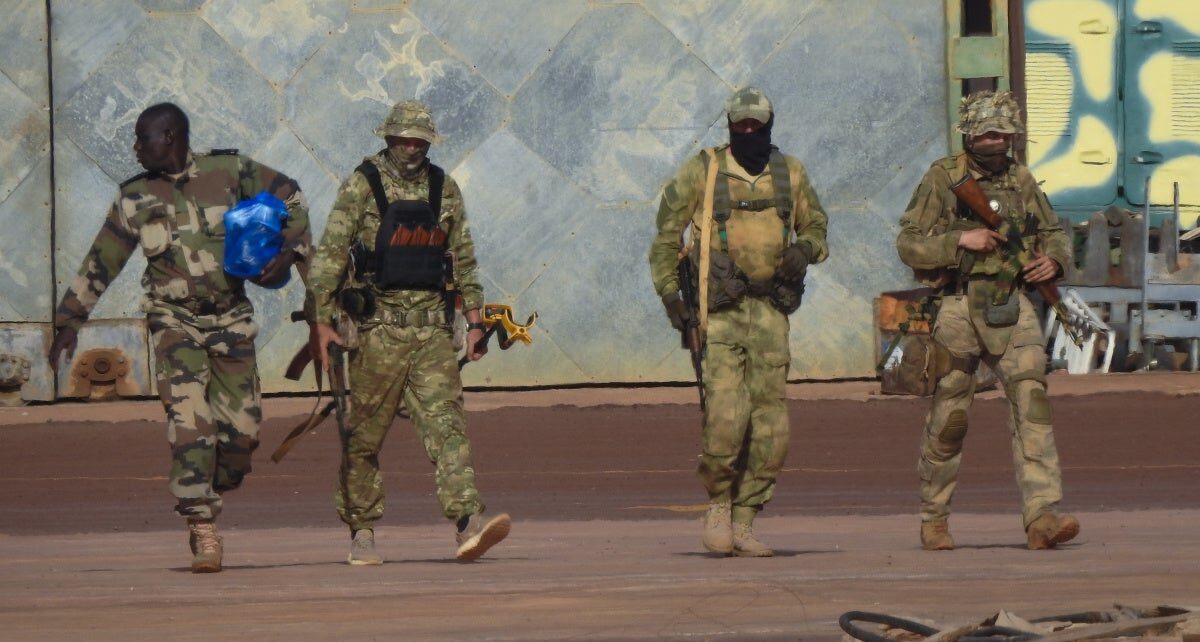
The Malian Armed Forces and their allied Russian-backed Wagner Group have been accused of committing dozens of summary executions and forced disappearances of Fulani men since January 2025. These allegations, supported by credible reports, highlight a disturbing pattern of abuse in Mali’s ongoing conflict against Islamist armed groups.
Key Allegations and Evidence
- Summary executions: At least 12 Fulani men have been executed by Malian troops and Wagner fighters since January 2025, with many victims shot at close range.
- Forced disappearances: More than 80 Fulani men have vanished after being detained by security forces in operations targeting the Group for the Support of Islam and Muslims (JNIM).
- Targeted violence: Survivors and witnesses report systematic abuse against Fulani civilians, often accused of collaborating with Islamist militants.
- Mass killings: In Sebabougou (Kayes region), at least 65 Fulani herders and cattle traders were reportedly executed after being detained in April.
International Response and Legal Concerns
The African Union (AU) has been urged to strengthen its efforts in Mali to protect civilians from abuses by all warring parties. Analysts emphasize the need for:
- Independent investigations into alleged war crimes
- Prosecution of responsible commanders under international law
- Accountability for the removal of Mali from the ECOWAS regional court system
Mali is a party to both the Geneva Conventions and the International Convention for the Protection of All Persons from Enforced Disappearance. The International Criminal Court (ICC) has an ongoing investigation into alleged war crimes in Mali since 2012.
Specific Incidents Documented
Kobou (January 23, 2025)
Witnesses reported that Malian soldiers killed three Fulani men, including two elderly individuals found with blindfolds and bound hands. At least 30 homes were burned during the operation, forcing residents to flee.
Farana (March 26, 2025)
Four Fulani men were reportedly beaten to death near a riverbank, with their bodies removed by soldiers. Survivors described finding blood and human remains at the scene.
Sebabougou (April 12, 2025)
Over 100 Fulani men were detained and reportedly transferred to a military camp where at least 43 bodies were later discovered. Families continue searching for 65 missing individuals.
Belidanédji (March 30, 2025)
Six Fulani civilians were executed after Malian troops and Wagner fighters clashed with Islamist militants. Survivors described indiscriminate killings of unarmed villagers.
Sikere (May 14, 2025)
Four Fulani men were executed in a mosque courtyard after being accused of supporting JNIM. Villagers reported threats of further violence if retaliation occurred.
Wagner Group’s Role and Withdrawal
Since 2021, the Wagner Group has conducted joint counterinsurgency operations with Malian forces. While Malian authorities have denied foreign mercenary presence, Russian officials have acknowledged Wagner’s involvement in security operations. The group’s reported withdrawal in June 2025 coincides with increased Islamist militant activity and the deployment of Africa Corps, a new Russian paramilitary unit.
Human Rights and International Law
All parties to Mali’s conflict, including foreign fighters, are bound by international humanitarian law. Key violations include:
- Summary executions violating Article 3 of the Geneva Conventions
- Torture and inhuman treatment
- Enforced disappearances prohibited by international conventions
- Collective punishment of civilian populations
Experts warn that senior Malian and Russian officials could face future accountability for these atrocities, either through domestic prosecutions or international judicial mechanisms.