From fiery rhetoric to measured statesmanship
Since departing the Prime Minister’s office, Ousmane Sonko has undergone a remarkable transformation in his public discourse. The once outspoken Pastef leader has adopted a markedly more measured and nuanced tone, deliberately shedding his previous confrontational posture to project an image of political moderation.
The evolution of a political leader
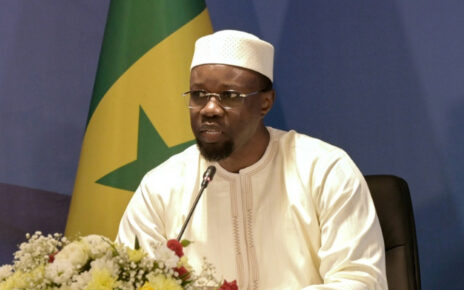
At a recent party congress in Diamniadio, Sonko explicitly called on his most ardent supporters to temper their rhetoric in public spaces. “Pastef has become a mature party,” he declared, emphasizing that the movement must set an example for the nation. “We must watch our language, because we are observed by everyone—religious leaders, families, and citizens alike. Insults and provocations only diminish us.”
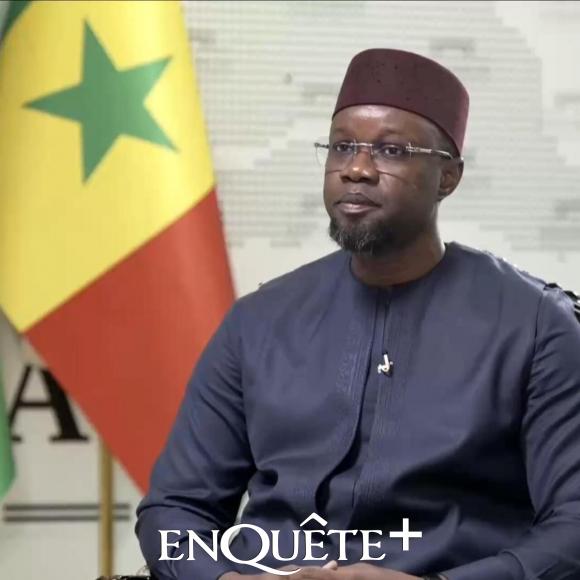
The shift in Sonko’s communication style has been particularly noticeable in recent media appearances. Gone are the days of absolute, uncompromising statements. In a recent interview, when asked about potential debt restructuring—a topic he once vehemently opposed—he adopted a more pragmatic stance: “We do not hold rigid positions. We will examine the situation with clarity and responsibility.” His response reflected a willingness to consider options previously rejected outright.
Navigating contradictions in policy positions
Sonko’s evolving rhetoric has not been without inconsistencies. On the controversial issue of debt restructuring, he has alternated between firm opposition and cautious openness. “A reckless restructuring is not what we seek,” he clarified. “As Former Prime Minister, I opposed it because the conditions did not justify it. Now, as I transition to my new role, I recognize the need for careful consideration—though solutions must always serve Senegal’s best interests.”
His stance on “odious debt” has also shifted. Once a vocal advocate for its cancellation, he now acknowledges the complexity of the issue: “This debt is indeed partly odious. Political courage is required to address it. As a political leader, I have spoken on this matter repeatedly. I hope the current administration will take responsibility to pursue its cancellation.” Yet, when pressed on why he did not act during his tenure as Prime Minister, his responses were vague and unconvincing, revealing the delicate balance he now walks between past and present positions.
The contradictions extend to his views on homosexuality. While he has long supported strict enforcement of anti-LGBTQ+ laws, he recently introduced a new argument—that arrests were made before the passage of the controversial 2024 law. “The focus should be on preventing HIV transmission,” he claimed, though his previous statements had emphasized eradicating the practice entirely. His shifting justifications have drawn criticism from both sides of the debate.
Projecting a new image of stability
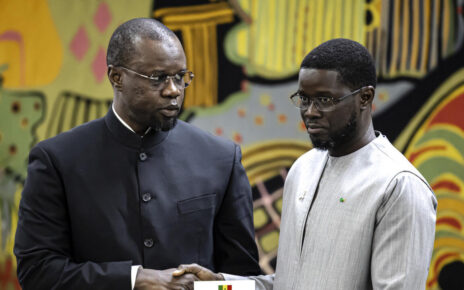
Beyond policy nuances, Sonko has actively distanced himself from his earlier confrontational style. He now avoids inflammatory language toward President Bassirou Diomaye Faye, dismissing the idea of “betrayal” as a matter of personal morality rather than political conflict. “What exists between us are political differences, not personal grievances,” he asserted, framing their disagreements as part of the democratic process.
His recent address to party members underscored this new approach. “Pastef is no longer just a movement—it is a party of ideas, science, and solutions,” he stated. “Demonstrate maturity, intellect, and civic responsibility. Do not fall for provocations designed to paint us as instigators of chaos.” He warned that opponents seek to replicate the unrest of 2021–2024 by pushing the movement into the streets, only to label it as violent and reckless.
The big question: strategy or sincerity?
Observers are divided on whether Sonko’s transformation reflects genuine political maturation or a calculated shift to consolidate power ahead of the 2029 elections. His ability to adapt his messaging—sometimes within the same day—suggests a leader finely tuned to his audience. Yet the inconsistencies in his positions leave room for skepticism. Is he truly evolving, or merely recalibrating his approach to suit the moment?
The answer may lie in the balance between his past as a firebrand opposition leader and his future as a key figure in Senegal’s political landscape. One thing is certain: Ousmane Sonko is no longer the same politician who once dominated headlines with bold declarations. Today, he speaks in measured tones, weighing each word—but whether this reflects a lasting change or a temporary pivot remains to be seen.