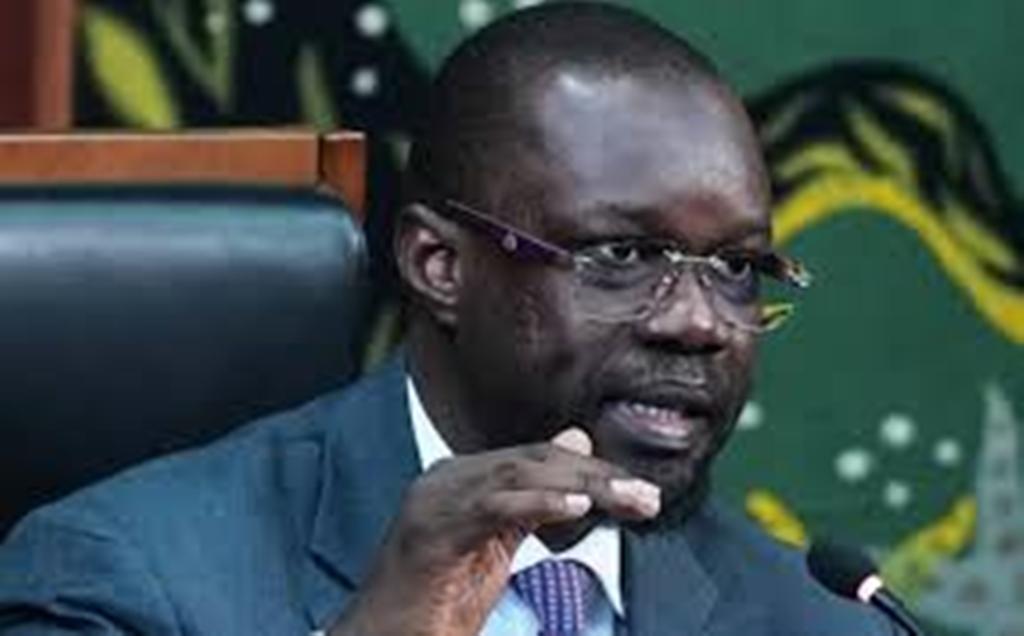
The Speaker of Senegal’s National Assembly, Ousmane Sonko, has called on President Bassirou Diomaye Faye to officially enact the newly adopted constitutional reform law. The legislation, passed with a qualified majority in Parliament this week, is viewed by Sonko as a cornerstone for strengthening democratic transparency in the country.
Constitutional reform faces resistance
According to Sonko, the President cannot selectively enforce constitutional provisions or bypass the newly approved law by submitting it to a referendum. He argues that the National Assembly’s three-fifths majority vote constitutes both adoption and final approval of the reform. Sonko emphasized that when the Assembly convenes, it holds the constituent power, making further judicial or executive intervention unnecessary.
He also dismissed the notion of referring the law to the Constitutional Council, stating that the court has already ruled on the correct procedures for parliamentary-led constitutional amendments. Sonko’s remarks come amid growing tensions between the executive and legislative branches over the reform’s implementation.
Key provisions under scrutiny
Sonko criticized President Faye’s objections to two major provisions in the reform: the mandatory declaration of assets by the President upon taking office and at the end of their term, and the ban on political party leadership during a president’s mandate. Notably, these were policies Faye himself championed while in opposition, Sonko pointed out.
Sonko hails reform as a democratic milestone
Describing the constitutional changes as one of the most significant advances for Senegalese democracy, Sonko highlighted its potential to enhance public governance transparency and reduce the financial burden of democratic processes. He urged President Faye to reconsider his stance and enact the law without delay, asserting that a referendum on these provisions would be redundant and counterproductive.