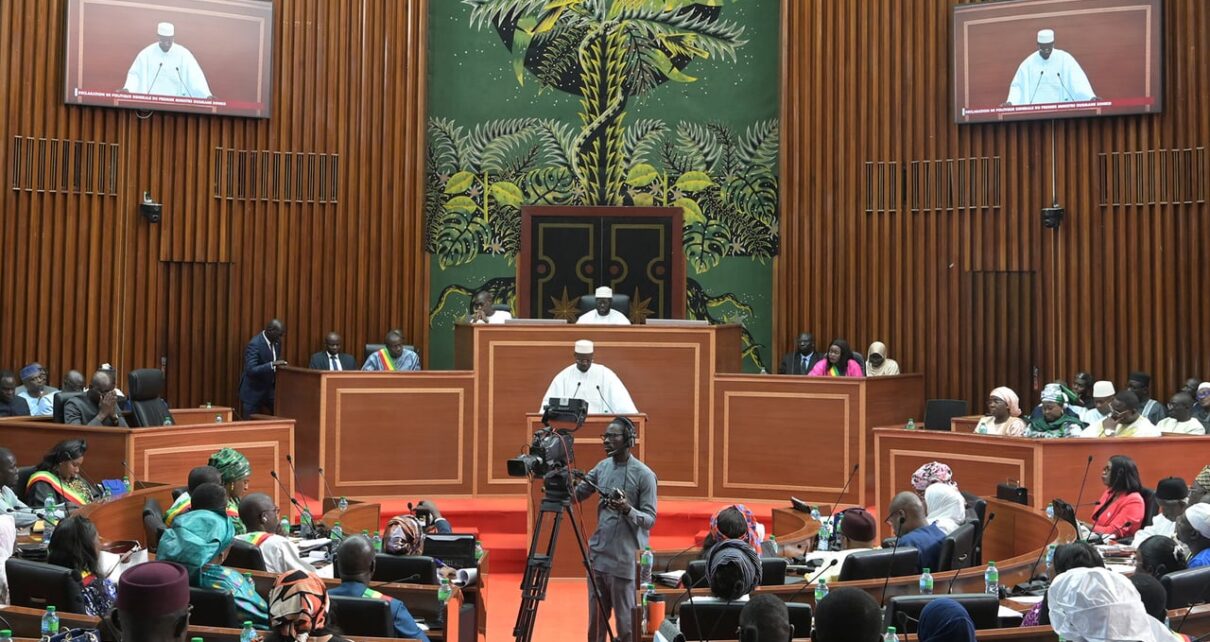
The debate over Senegal’s special funds has intensified following recent political developments, with growing concerns about fiscal secrecy and its implications for governance. At the heart of the discussion is a legislative proposal aimed at revoking a contentious amnesty law, a move that has sparked both support and criticism across the political spectrum.

The push to repeal the amnesty law
Prime Minister Ousmane Sonko recently outlined the government’s intention to introduce legislation to abolish a contentious amnesty law passed under former President Macky Sall. This law, which shields individuals from prosecution for political violence, has become a focal point of national debate. Critics argue that maintaining such secrecy undermines democratic accountability, while supporters contend that it is necessary to prevent further instability.
The proposed repeal reflects broader tensions between transparency and political expediency. Proponents of the move emphasize the need for accountability, particularly in the aftermath of past unrest. Opponents, however, warn that revoking the law could reignite tensions and complicate efforts to maintain social cohesion.
Why special funds remain shrouded in secrecy
Special funds in Senegal have long operated outside standard budgetary oversight, raising questions about their management and allocation. These discretionary funds, often used for urgent or sensitive expenditures, are typically shielded from public scrutiny due to concerns about operational efficiency and national security. However, this opacity has fueled suspicions about potential misuse and lack of accountability.
Transparency advocates argue that special funds should be subject to rigorous audits and parliamentary oversight to ensure they serve the public interest. The current system, they claim, creates an environment where financial decisions lack proper scrutiny, eroding trust in institutions.
The role of political alliances in the debate
The controversy surrounding special funds has drawn attention to the shifting dynamics within Senegal’s political landscape. The Pastef movement, a key player in the current administration, has been vocal in advocating for greater transparency. Its stance aligns with broader calls for reform, particularly among younger voters and civil society groups who demand more openness in governance.
Opposition factions, however, have raised concerns about the potential misuse of this debate to target political rivals. The tension underscores a deeper struggle over the balance between accountability and political strategy in a young democracy.
What’s at stake for Senegal’s governance
The outcome of this debate could significantly impact Senegal’s democratic trajectory. If the amnesty law is repealed and special funds are brought under stricter oversight, the country may see a shift toward greater institutional accountability. Conversely, resistance to these reforms risks entrenching a culture of secrecy that could undermine public trust in government.
The coming months will be critical as lawmakers weigh these competing priorities. The decisions made now will shape not only fiscal policy but also the broader principles of transparency and governance that define Senegal’s future.