Senegal’s opposition unites behind Diomaye Faye to challenge Sonko’s agenda
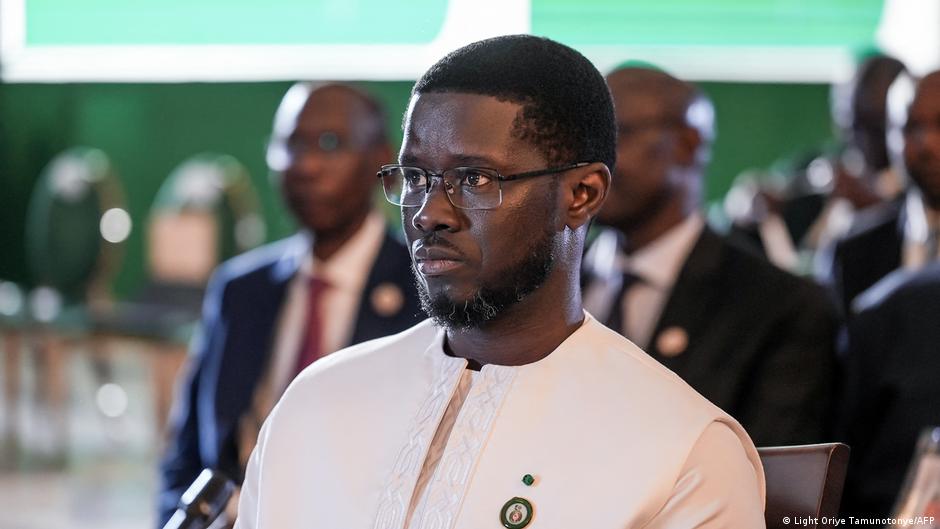
The Democratic Party of Senegal (PDS) has taken a decisive stance against constitutional reforms currently under debate, calling on citizens to vote “no” in the upcoming referendum. This move aligns the party with President Bassirou Diomaye Faye, despite years of rivalry with his administration.
At the heart of this legislative push is a bill, championed by Ousmane Sonko’s Pastef party, which seeks to expand parliamentary powers while curtailing those of the presidency. Though passed by a majority in the National Assembly, the reforms have sparked intense national debate. President Faye has chosen to bypass legislative approval by submitting the proposals directly to a popular vote—a decision that has drawn both support and criticism.
From rivals to reluctant allies: the PDS’s shifting alliances
This isn’t the first time the PDS has found itself in an uneasy partnership with Pastef. In the 2022 legislative elections, the two parties joined forces to challenge then-President Macky Sall’s ruling coalition. Two years later, as Senegal prepared for the 2024 presidential vote, the PDS made a strategic U-turn by endorsing the Sonko–Faye ticket—effectively sidelining its own candidate, Karim Wade, who had been barred from running.
Hamadou Tidiane Sy, director of Dakar’s E-Jicom journalism school, suggests this alliance was driven more by political pragmatism than shared ideology. “The PDS was in freefall after losing power,” he explains. “They saw this as an opportunity to reposition themselves—closer to the corridors of power.”
The collaboration proved short-lived. Following Faye’s election, the PDS remained outside his government and his coalition, maintaining its independence. Observers note that Karim Wade may have gambled on Sonko’s radical rhetoric eventually alienating other political factions—a bet that appeared validated when the PDS later allied with Sall’s APR party in late-2024 elections.
Uniting against Sonko: a temporary convergence
Today’s PDS decision to oppose the constitutional reforms reflects a broader trend: much of Senegal’s opposition is coalescing not out of support for President Faye, but as a united front against Sonko. In an official statement, the PDS urged voters to “bar the path” to reforms it claims serve only Sonko’s personal ambitions.
“The PDS calls on all its members, supporters, and the Senegalese people to mobilize and vote massively ‘NO’ in the referendum. These repeated attempts to alter our constitution are driven solely by Ousmane Sonko’s thirst for power and disregard for our republican institutions—the very foundations of our democracy.”
Sy argues this opposition transcends party lines. “Even those not formally allied with Diomaye are saying ‘no’ to Sonko,” he notes. “He’s increasingly seen as a disruptor, a figure who obstructs reconciliation and fuels division.”
A fragile alliance with deeper implications
While the PDS’s support may strengthen Faye’s hand, analysts warn it is unlikely to herald a lasting partnership. Sy emphasizes that the opposition’s opposition to the reforms does not equate to endorsement of the president. “Their priority is blocking Sonko’s agenda—not embracing Faye’s vision,” he states. “They oppose the process, not necessarily the outcome.”
This tactical alignment may, however, offer a lifeline to a president facing growing dissent within his own ranks. With tensions rising inside the Pastef movement, Faye appears to be cultivating an alternative base—one that could prove crucial for his political future.
Faye’s post-Pastef strategy
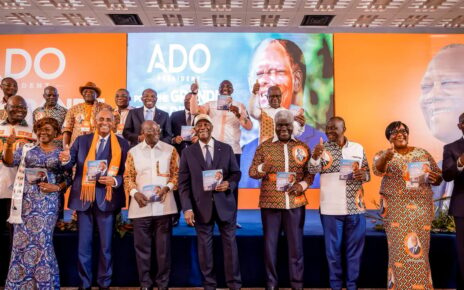
Sy suggests Faye is already laying the groundwork for a future beyond his current party. “He knows the Pastef cannot be relied upon for a second term,” he says. “He’s quietly building a new coalition—‘Diomaye President’—to secure his path forward.” Some within Pastef reportedly view this shift as outright betrayal, a rupture Sy describes as “inevitable.”
The president’s evolving alliances underscore a critical reality: in Senegal’s fluid political landscape, today’s rivals may become tomorrow’s partners—and vice versa. For the PDS, this moment represents both an opportunity and a gamble—one that could reshape the nation’s power dynamics for years to come.