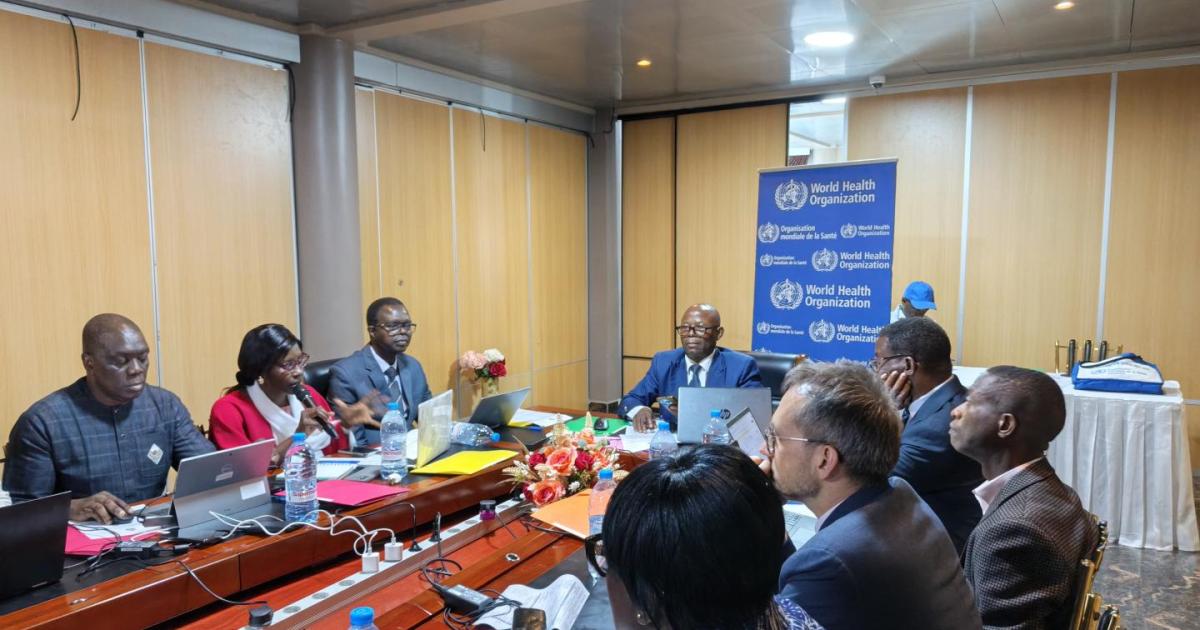
Mbankomo workshop explores fiscal solutions to curb tobacco use
Mbankomo, July 2026 – For three days, policymakers, health officials, economists, and civil society leaders gathered not to discuss hospital construction or drug procurement, but to examine tax structures. Behind spreadsheets and fiscal simulations lay a shared objective: how to leverage tobacco taxation to save lives and secure sustainable healthcare funding in Cameroon.
The workshop, held from July 22 to 24, 2026, brought together officials from the Ministries of Public Health and Finance, customs authorities, parliamentarians, civil society representatives, and technical partners. Their focus? The often-overlooked potential of tobacco taxes as both a public health tool and a development catalyst.
The heavy toll of tobacco on Cameroon’s health and economy
Tobacco remains one of the world’s leading preventable causes of death, and Cameroon bears a significant burden. Adult smoking prevalence stands at 9%, while more than 10% of adolescents aged 13–15 use tobacco products. Shockingly, 37% of the population is exposed to secondhand smoke. Annually, tobacco claims approximately 66,000 lives in the country.
The health consequences extend far beyond mortality. Tobacco use drives up rates of cancer, cardiovascular diseases, strokes, and chronic respiratory conditions. It also places immense strain on households, healthcare systems, and the national economy. Despite this, cigarettes remain disturbingly affordable. In 2024, the most popular cigarette pack retailed for just $4.07 (PPP-adjusted), well below the African average of $5.06 and the global mean of $6.98. Even more alarming, tobacco taxes accounted for only 36% of the retail price—far below the World Health Organization’s recommended threshold of 75%.
Why higher taxes save lives—and money
Opening the discussions, national leaders emphasized that raising tobacco taxes is one of the most effective strategies to reduce consumption. Price sensitivity is particularly high among youth; when cigarettes become less affordable, fewer adolescents take up smoking. A tax hike today could prevent disease, disability, and death for decades to come.
But the benefits don’t end with public health. Well-designed fiscal policies can generate additional domestic revenue, which can be reinvested into stronger health systems, non-communicable disease prevention, and universal health coverage. The message was clear: health and economic development are not mutually exclusive goals—they can—and should—be pursued simultaneously.
Data-driven reforms for maximum impact
Before crafting effective policies, decision-makers need reliable data. During the workshop, participants analyzed Cameroon’s tobacco consumption patterns, economic costs, health impacts, current tax structures, market dynamics, and international best practices. Dr. William Maina, Senior Project Officer at WHO Africa, highlighted tobacco’s role in driving cancers, heart disease, strokes, and chronic respiratory illnesses. Nicotine addiction also affects brain development, fertility, and cardiovascular health.
Experts also addressed common misconceptions about tobacco tax increases—such as fears of reduced public revenue, massive job losses, or a surge in illicit trade. International evidence shows these concerns are unfounded when reforms are carefully designed and enforced. The consensus? Public policy must be guided by facts, not fear.
Modeling the future: what would a tax hike achieve?
One of the most anticipated moments came when participants reviewed simulations using the WHO TaXSiM model, which helps governments project the health and fiscal impacts of different tax reforms before implementation. Using Cameroon-specific data, several scenarios were tested.
The results were unequivocal. Two progressive tax increases were modeled:
- A rise in the specific minimum tax from 5,000 FCFA to 10,000 FCFA per 1,000 cigarettes in 2027;
- An increase to 15,000 FCFA per 1,000 cigarettes in 2028, applied uniformly to both imported and locally produced products.
The projections were striking. Cigarette sales would drop from 162.9 million packs in 2026 to 144.1 million in 2027, and further to 131.9 million in 2028—a cumulative reduction of nearly 19%. The number of smokers would decline from 810,000 to 744,000 by 2028, preventing an estimated 66,000 new smokers.
At the same time, excise tax revenues would surge from 15.2 billion FCFA in 2027 to 28.8 billion FCFA, and then to 38.3 billion FCFA in 2028. Total tax revenue would climb from 32.6 billion FCFA to 57.3 billion FCFA—generating nearly 25 billion FCFA in additional funds compared to baseline projections.
For experts, these figures proved that health and economic progress are compatible. A stronger tobacco tax policy could simultaneously reduce smoking and boost public finances.
Funding health for generations
In an era of declining international health funding, tobacco taxation offers Cameroon a strategic opportunity to mobilize domestic resources. The projected additional revenue could support:
- Universal Health Coverage initiatives;
- Non-communicable disease prevention programs;
- Smoking cessation services;
- Strengthening health infrastructure;
- Health promotion activities.
Participants concluded that tobacco tax reform is one of the few policies capable of improving population health, reducing future disease-related costs, and strengthening the financial sustainability of the health system.
New threats: the rise of nicotine products targeting youth
Discussions also revealed a growing concern: the rapid emergence of nicotine products disguised as styluses, smartwatches, lipsticks, toys, candies, and chewing gum. These sleek, high-tech alternatives are marketed aggressively to adolescents through sophisticated tactics.
A video screening showing a teenager using an e-cigarette hidden in a smartwatch left a deep impression on attendees. WHO officials warned that these products are far from harmless—they fuel nicotine addiction, expose users to toxic substances, and risk normalizing nicotine use among youth.
Participants urged immediate regulatory and fiscal action to prevent these products from taking root in Cameroon’s market.
Eight key recommendations for a tobacco-free future
By the end of the workshop, a unified set of recommendations emerged:
- Gradually increase the specific minimum tax to 15,000 FCFA per 1,000 cigarettes;
- Apply the tax uniformly to both imported and domestically produced cigarettes;
- Strengthen regional dialogue within CEMAC on excise duties;
- Establish a national technical working group on tobacco taxation;
- Develop a permanent monitoring and evaluation system;
- Improve the availability of fiscal and trade data;
- Accelerate the creation of a National Tobacco Control Fund;
- Implement a national traceability system for tobacco products.
Participants also stressed the need for intensified awareness campaigns—especially targeting youth—and supporting tobacco farmers in transitioning to alternative crops. Implementing the Protocol to Eliminate Illicit Trade in Tobacco Products and establishing a national traceability system were also prioritized.
Dr. Colette Taka Joro, Permanent Secretary of the National Anti-Drug Committee, emphasized that high-level dialogues with government, parliamentarians, and stakeholders will be essential to fast-track reform adoption and ensure ownership.
A shared vision for Cameroon’s health future
Closing the workshop, Dr. Hassan Ben Bachir, Director of Health Promotion at the Ministry of Public Health, summarized the collective vision: “Tobacco taxation is more than a revenue tool—it’s an investment in people’s health. By shielding youth from starting to smoke and securing sustainable funding for our health system, we are investing in Cameroon’s future. The recommendations from this workshop provide a solid roadmap to turn scientific evidence into actionable public policy for the benefit of all.”
In Mbankomo, participants left with a shared conviction: tobacco tax reform is not merely a fiscal issue—it’s a prevention tool, a youth protection measure, a revenue generator, and a long-term investment in the nation’s human capital.
The data from this workshop demonstrate that bolder tobacco taxation can simultaneously curb consumption, save lives, reduce the burden of non-communicable diseases, and generate substantial funds to finance national health priorities.
Every tax increase represents thousands of lives protected. Every evidence-based reform paves the way for a Cameroon where fewer young people start smoking, families are better shielded from tobacco’s consequences, and the health system is equipped to meet the population’s needs sustainably.
By positioning tobacco tax reform as a strategic lever for public health and sustainable financing, Cameroon has the chance to invest today in the health of future generations.”